
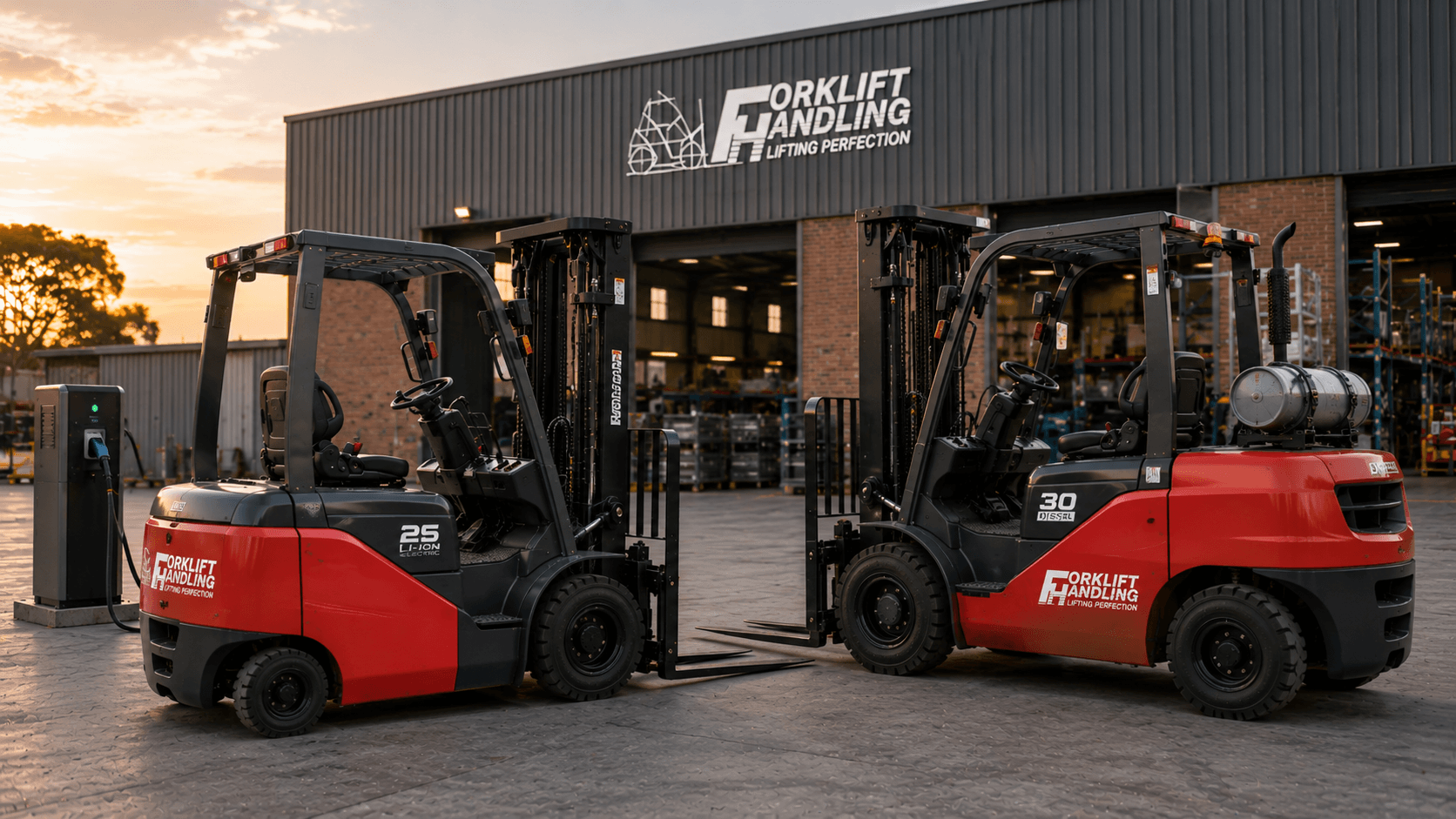
Which Forklift Is Right for Your Business?
Choosing between an electric and diesel forklift is one of the most important decisions businesses face when investing in material handling equipment. Both options offer unique advantages and are designed for different operating environments.
Whether you manage a warehouse, logistics facility, manufacturing plant, distribution centre, construction site, or industrial operation, selecting the right forklift can improve productivity, reduce operating costs, and enhance workplace safety.
In this guide, we’ll compare electric and diesel forklifts, explore their advantages and disadvantages, and help you determine which option best suits your business needs.
Understanding the Difference Between Electric and Diesel Forklifts
The primary difference between these forklifts is their power source.
Electric Forklifts
Electric forklifts are powered by rechargeable batteries and electric motors. They produce no exhaust emissions and are commonly used indoors.
Diesel Forklifts
Diesel forklifts use internal combustion engines powered by diesel fuel. They are known for their power, durability, and ability to handle demanding outdoor applications.
Electric Forklift Advantages
1. Lower Operating Costs
One of the biggest benefits of electric forklifts is their lower day-to-day running costs.
Businesses can save money through:
- Reduced fuel expenses
- Lower maintenance costs
- Fewer moving engine components
- Less frequent servicing requirements
Over time, these savings can significantly reduce the total cost of ownership.
2. Environmentally Friendly
Electric forklifts produce zero direct emissions, making them an environmentally responsible choice.
Benefits include:
- Reduced carbon footprint
- Improved indoor air quality
- Compliance with environmental regulations
- Cleaner working environments
This makes electric forklifts particularly attractive for businesses focused on sustainability.
3. Ideal for Indoor Operations
Electric forklifts are commonly used in:
- Warehouses
- Distribution centres
- Retail facilities
- Food processing plants
- Pharmaceutical environments
Their emission-free operation makes them safe for enclosed spaces.
4. Quiet Operation
Electric forklifts operate much more quietly than diesel models.
Advantages include:
- Reduced workplace noise
- Improved operator comfort
- Better communication between staff
- Lower noise pollution
This is especially valuable in indoor environments where employees work in close proximity.
5. Smoother Driving Experience
Electric forklifts often provide:
- Smooth acceleration
- Precise control
- Reduced vibration
- Improved manoeuvrability
This can contribute to increased productivity and reduced operator fatigue.
Electric Forklift Disadvantages
1. Battery Charging Time
Unlike diesel forklifts that can be refuelled within minutes, electric forklifts require battery charging.
Charging may take several hours depending on:
- Battery type
- Charger capacity
- Battery condition
Businesses operating multiple shifts may need spare batteries or charging infrastructure.
2. Higher Initial Purchase Cost
Electric forklifts often have a higher upfront purchase price compared to equivalent diesel models.
Although operating costs are lower, the initial investment can be greater.
3. Limited Outdoor Performance
While modern electric forklifts have improved significantly, they may not be ideal for:
- Rough terrain
- Muddy conditions
- Heavy-duty outdoor applications
- Long-distance outdoor travel
Certain outdoor environments remain better suited to diesel equipment.
Diesel Forklift Advantages
1. Exceptional Power and Performance
Diesel forklifts are designed for demanding applications and heavy loads.
Benefits include:
- High lifting capacities
- Strong torque output
- Consistent performance
- Excellent productivity in tough conditions
They are often the preferred choice for industrial operations.
2. Ideal for Outdoor Applications
Diesel forklifts perform exceptionally well in:
- Construction sites
- Shipping yards
- Mining operations
- Manufacturing facilities
- Outdoor storage yards
Their robust design allows them to handle uneven surfaces and harsh environments.
3. Fast Refuelling
Diesel forklifts can be refuelled in minutes, reducing downtime and supporting continuous operations.
This is particularly beneficial for:
- Multi-shift operations
- High-demand environments
- Businesses requiring maximum equipment availability
4. Longer Continuous Operation
Diesel forklifts can often operate for extended periods without interruption.
This makes them well suited to:
- Intensive material handling tasks
- Large industrial facilities
- High-volume operations
- Diesel Forklift Disadvantages
1. Higher Fuel Costs
Fuel expenses can significantly increase operating costs over time.
Businesses must account for:
- Diesel fuel consumption
- Fuel price fluctuations
- Ongoing refuelling requirements
These costs can be substantial for heavily utilised fleets.
2. Increased Maintenance Requirements
Diesel engines contain more moving components than electric systems.
Maintenance may include:
- Oil changes
- Filter replacements
- Engine servicing
- Cooling system maintenance
- Exhaust system repairs
This generally results in higher maintenance costs throughout the forklift’s lifespan.
3. Emissions and Environmental Impact
Diesel forklifts produce exhaust emissions that may not be suitable for indoor environments.
Potential concerns include:
- Air quality issues
- Environmental compliance requirements
- Increased ventilation needs
For this reason, diesel forklifts are typically used outdoors.
4. Higher Noise Levels
Diesel engines generate more noise than electric models.
This can affect:
- Operator comfort
- Workplace communication
- Noise-sensitive environments
Are electric forklifts cheaper to run?
Yes. Although they often cost more upfront, electric forklifts generally have lower fuel and maintenance expenses.
How long do electric forklift batteries last?
Most forklift batteries can last between 5 and 10 years when properly maintained, depending on usage and charging practices.
Can electric forklifts be used outdoors?
Yes. Many modern electric forklifts can operate outdoors on suitable surfaces, although diesel forklifts are often better suited for rough terrain and heavy-duty outdoor work.
Which forklift has a longer lifespan?
Both electric and diesel forklifts can provide many years of service when properly maintained. The overall lifespan depends on operating conditions, maintenance practices, and utilisation levels.
Conclusion
Both electric and diesel forklifts offer significant advantages depending on your operational requirements. Electric forklifts excel in indoor environments where efficiency, low operating costs, and environmental considerations are priorities. Diesel forklifts remain the preferred choice for heavy-duty outdoor applications where power, durability, and extended runtime are essential.
Before making a decision, carefully evaluate your workload, operating environment, budget, and long-term business goals. Choosing the right forklift can improve productivity, reduce costs, and deliver long-term value for your operation.
For expert advice on selecting the best forklift for your business, consult a trusted forklift handling specialist who can recommend the ideal solution for your specific requirements.
Contact us for your Forklift Requirements Today!