
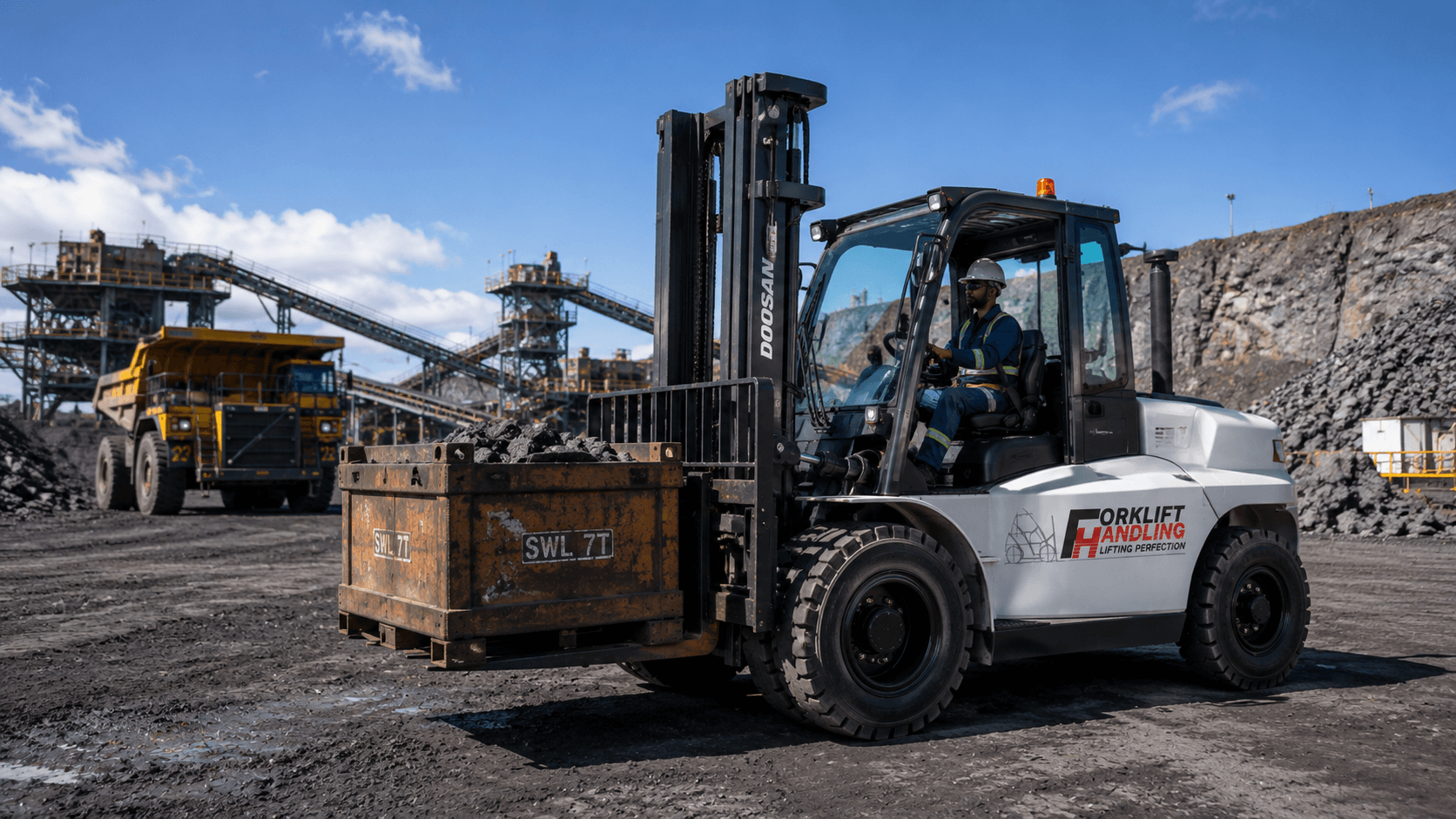
Choosing the Right Forklift for Mining Operations
The mining industry operates in some of the most demanding environments in the world. From underground operations and processing plants to open-cast mines and heavy industrial facilities, reliable material handling equipment is essential for maintaining productivity and ensuring safe operations.
Forklifts play a critical role in transporting materials, equipment, spare parts, pallets, and machinery throughout mining sites. However, not all forklifts are suitable for the harsh conditions commonly found in mining environments.
In this guide, we’ll explore the key forklift requirements in the mining industry and help businesses select the right equipment for their operations.
Why Forklifts Are Important in Mining
Mining operations rely on forklifts for a wide variety of tasks, including:
- Moving heavy equipment and components
- Transporting pallets of supplies
- Handling spare parts and maintenance materials
- Loading and unloading delivery vehicles
- Supporting processing plant operations
- Managing warehouse and storage facilities
- Assisting with shutdown and maintenance projects
Because mining sites often operate around the clock, forklifts must be durable, reliable, and capable of performing under challenging conditions.
Unique Challenges of Mining Environments
Mining operations place greater demands on forklifts than most industries.
Common challenges include:
- Dust and debris
- Rough terrain
- Heavy loads
- Long operating hours
- Extreme temperatures
- Remote operating locations
- Continuous production schedules
These conditions require specialised equipment designed for industrial and mining applications.
Key Forklift Requirements for Mining Operations
1. High Lifting Capacity
Mining operations frequently handle heavy loads such as:
- Equipment components
- Steel structures
- Pumps and motors
- Conveyor components
- Industrial parts
- Palletised mining supplies
As a result, forklifts used in mining often require higher lifting capacities than those used in warehouses.
Common mining forklift capacities include:
- 3 Ton Forklifts
- 5 Ton Forklifts
- 7 Ton Forklifts
- 10 Ton Forklifts
- Heavy-Duty Forklifts exceeding 16 Tons
Selecting the correct lifting capacity is essential for both safety and productivity.
2. Durable Construction
Mining forklifts must be built to withstand harsh working conditions.
Important features include:
- Heavy-duty chassis construction
- Reinforced masts
- Industrial-grade hydraulic systems
- Rugged drivetrains
- Protected engine compartments
Durability is a key factor when operating in remote environments where downtime can be extremely costly.
3. Diesel Power for Maximum Performance
While electric forklifts are commonly used in warehouses, diesel forklifts remain the preferred choice for most mining applications.
Benefits of Diesel Forklifts in Mining
- High torque output
- Excellent lifting performance
- Long operating hours
- Fast refuelling
- Reliable outdoor operation
Diesel forklifts are particularly effective in open-cast mines, processing plants, and heavy industrial environments.
4. Rough Terrain Capability
Mining sites often feature uneven ground surfaces.
Forklifts operating in these environments should be equipped with:
- Heavy-duty pneumatic tyres
- Increased ground clearance
- Enhanced suspension systems
- Superior traction capabilities
These features help maintain stability and productivity on challenging terrain.
5. Enhanced Safety Features
Safety is a top priority in mining operations.
Forklifts should be equipped with advanced safety systems such as:
- LED work lights
- Reverse alarms
- Operator presence systems
- Stability control technologies
- High-visibility warning beacons
- Camera systems
- Emergency shutdown systems
Mining companies often have strict safety standards that forklifts must meet before being approved for site use.
Best Forklift Types for Mining Applications
Heavy-Duty Diesel Forklifts
Heavy-duty diesel forklifts are the most common forklifts used in mining operations.
Advantages
- High lifting capacities
- Exceptional durability
- Reliable performance
- Suitable for demanding environments
Best For
- Processing plants
- Maintenance workshops
- Open-cast mining operations
- Equipment yards
These forklifts are designed to handle the heavy loads and harsh conditions commonly encountered in mining.
Rough Terrain Forklifts
Rough terrain forklifts are specifically designed for challenging outdoor environments.
Advantages
- Excellent traction
- Improved stability
- Enhanced ground clearance
- Ability to operate on uneven surfaces
Best For
- Construction areas within mines
- Remote mining locations
- Outdoor maintenance projects
- Infrastructure development
These forklifts perform exceptionally well where traditional warehouse forklifts would struggle.
Telehandlers
Telehandlers combine forklift functionality with extended reach capabilities.
Advantages
- Long reach
- Versatile operation
- Multiple attachment options
- Excellent outdoor performance
Best For
- Equipment maintenance
- Structural projects
- Elevated material handling
- General mining support operations
Telehandlers are increasingly used across mining sites due to their flexibility.
Forklift Applications in Mining
Maintenance Workshops
Forklifts transport components, tools, and replacement parts required for equipment maintenance.
Processing Plants
Material handling equipment supports production operations and movement of processed materials.
Warehouse Facilities
Mining warehouses rely on forklifts to manage inventory and spare parts storage.
Shutdown Projects
Major maintenance shutdowns often require additional forklift capacity to move equipment and materials efficiently.
Construction and Expansion Projects
Forklifts assist with infrastructure development and mine expansion activities.
Common Mistakes When Choosing Mining Forklifts
Avoid these common errors:
- Underestimating lifting requirements
- Selecting warehouse forklifts for outdoor use
- Ignoring terrain conditions
- Choosing equipment without local support
- Focusing solely on purchase price
A forklift that performs well in a warehouse may not survive the harsh demands of a mining operation.
Frequently Asked Questions
What type of forklift is most commonly used in mining?
Heavy-duty diesel forklifts are the most commonly used forklifts in mining due to their power, durability, and ability to operate in demanding outdoor environments.
Are electric forklifts used in mining?
Electric forklifts may be used in specific indoor areas such as warehouses and workshops, but diesel forklifts remain the preferred choice for most mining applications.
What forklift capacity is required for mining?
The required capacity depends on the application. Many mining operations utilise forklifts ranging from 3 tons to over 16 tons.
Why are rough terrain forklifts important in mining?
Mining sites often feature uneven surfaces, loose ground, and challenging terrain. Rough terrain forklifts provide the stability and traction needed to operate safely in these conditions.
Conclusion
Mining operations require forklifts that are powerful, durable, and capable of performing in some of the toughest environments imaginable. High lifting capacities, diesel power, rough terrain capability, advanced safety features, and reliable support are all essential considerations when selecting equipment for a mining site.
Heavy-duty diesel forklifts, rough terrain forklifts, and telehandlers remain among the most effective material handling solutions for mining operations. By choosing equipment specifically designed for mining conditions, businesses can improve productivity, reduce downtime, and maintain safe, efficient operations.
If you’re looking for a forklift solution for your mining operation, consult an experienced forklift handling specialist who can recommend the right equipment based on your site’s specific requirements.
Contact us for your Forklift Requirements Today!