
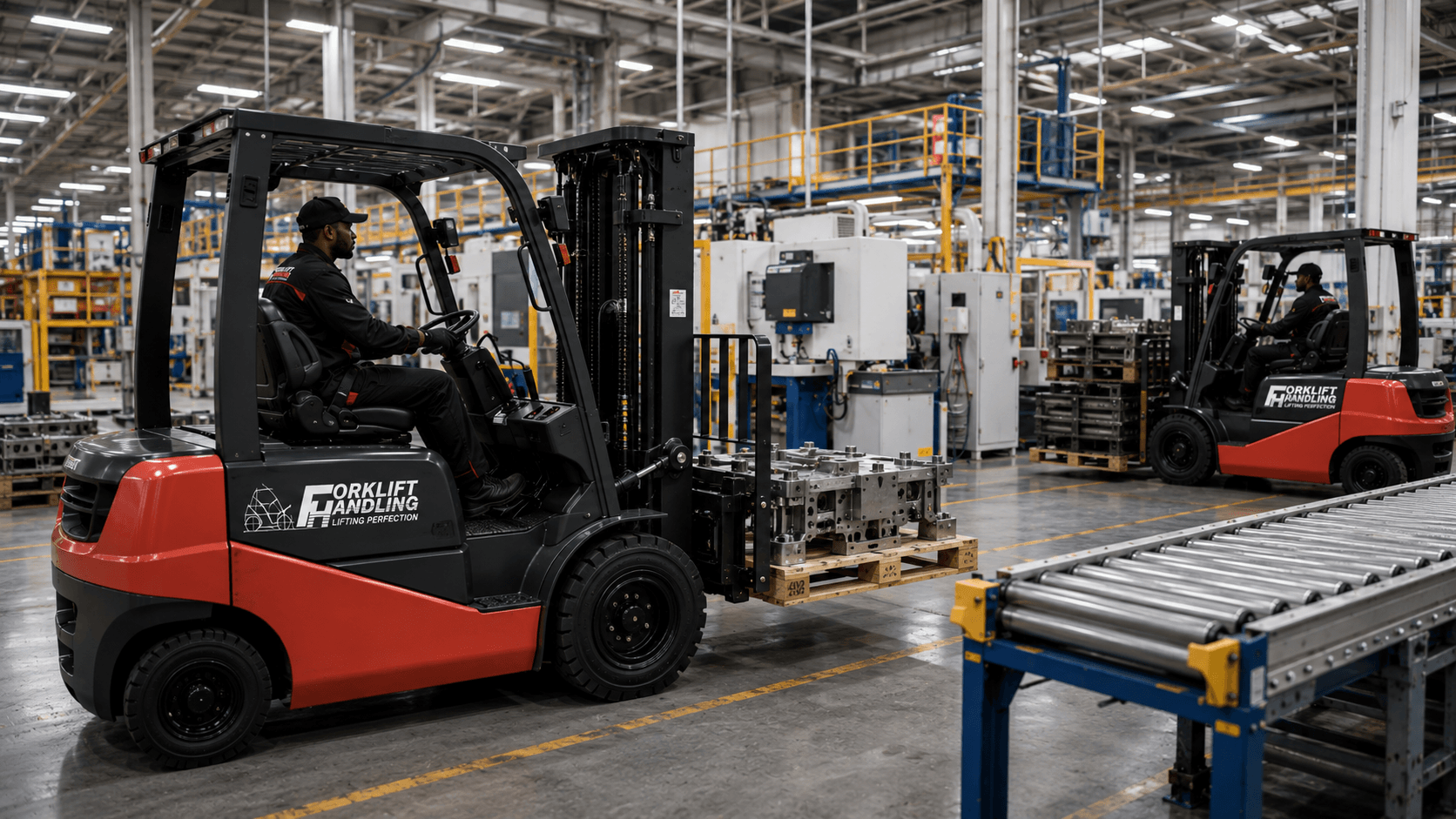
Why Forklifts Are Essential in Manufacturing Facilities
Manufacturing facilities rely on efficient material handling to keep production lines moving, reduce downtime, and maintain productivity. From receiving raw materials to transporting finished products, forklifts play a critical role in almost every stage of the manufacturing process.
However, not all forklifts are suitable for manufacturing environments. Different facilities have varying requirements depending on their products, layout, production volumes, and operating conditions.
Choosing the right forklift can improve workflow efficiency, enhance workplace safety, and reduce operating costs. In this guide, we’ll explore the best forklift types for manufacturing facilities and the key factors businesses should consider when selecting equipment.
Common Material Handling Challenges in Manufacturing
Manufacturing facilities often face unique material handling requirements, including:
- Moving raw materials to production lines
- Transporting finished products to storage areas
- Loading and unloading delivery vehicles
- Handling heavy components and machinery
- Operating in confined indoor spaces
- Supporting continuous production schedules
The right forklift solution can help overcome these challenges while improving overall operational efficiency.
Key Factors to Consider When Choosing a Manufacturing Forklift
1. Indoor or Outdoor Operation
The first consideration is where the forklift will primarily operate.
Indoor Operations
Most manufacturing facilities operate predominantly indoors, making electric forklifts a popular choice due to:
- Zero emissions
- Quiet operation
- Reduced maintenance requirements
- Improved air quality
- Indoor and Outdoor Operations
Facilities that regularly move materials between production areas and external loading zones may benefit from LPG forklifts or a mixed fleet.
Understanding the operating environment will help determine the most suitable forklift type.
2. Load Capacity Requirements
Different manufacturing industries handle different load weights.
Consider:
- Average load weight
- Maximum load weight
- Pallet dimensions
- Machinery and component sizes
Typical manufacturing forklifts range from:
- 1.5 Ton Forklifts
- 2.5 Ton Forklifts
- 3 Ton Forklifts
- 5 Ton Forklifts
Selecting the correct capacity ensures safe and efficient operation.
3. Lift Height Requirements
Many manufacturing facilities utilise storage racking for raw materials and finished goods.
Consider:
- Maximum racking height
- Storage system configuration
- Future expansion requirements
Forklifts should be capable of safely reaching all storage locations without compromising stability.
Best Forklift Types for Manufacturing Facilities
Electric Counterbalance Forklifts
Electric forklifts are among the most common forklifts used in manufacturing environments.
Advantages
- Zero exhaust emissions
- Lower operating costs
- Reduced maintenance
- Quiet operation
- Excellent manoeuvrability
Best For
- Indoor manufacturing plants
- Food production facilities
- Packaging facilities
- Electronics manufacturing
- Pharmaceutical production
Electric forklifts are often the preferred choice where cleanliness and air quality are important.
LPG Forklifts
LPG forklifts offer flexibility for facilities that require both indoor and outdoor operation.
Advantages
- Fast refuelling
- Lower emissions than diesel
- Continuous operation
- Versatile performance
Best For
- Mixed-use facilities
- Manufacturing plants with outdoor yards
- Facilities operating multiple shifts
LPG forklifts provide a practical balance between electric and diesel equipment.
Reach Trucks
Many manufacturing facilities use reach trucks to maximise warehouse storage capacity.
Advantages
- High lift heights
- Narrow aisle capability
- Improved storage density
- Excellent indoor performance
Best For
- Finished goods warehouses
- Raw material storage facilities
- High-racking environments
Reach trucks are ideal where vertical storage is a priority.
Pallet Stackers
For lighter-duty material handling tasks, pallet stackers can be a cost-effective solution.
Advantages
- Compact size
- Easy operation
- Low acquisition costs
- Suitable for smaller facilities
Best For
- Small manufacturing plants
- Production support areas
- Stockrooms and storage zones
Forklift Applications in Manufacturing
Forklifts are used throughout the manufacturing process.
Receiving Raw Materials
Forklifts unload incoming deliveries and transport materials to storage or production areas.
Feeding Production Lines
Materials are delivered directly to assembly lines and manufacturing stations.
Internal Product Movement
Components and work-in-progress inventory are moved between departments and workstations.
Finished Goods Storage
Completed products are transported to warehouse areas for storage and distribution.
Vehicle Loading and Dispatch
Forklifts load finished products onto trucks for delivery to customers and distributors.
For most indoor manufacturing facilities, electric forklifts provide the best long-term value.
Safety Considerations in Manufacturing Facilities
Safety should always be a top priority when selecting forklifts.
Look for features such as:
- Operator presence systems
- LED safety lighting
- Reverse alarms
- Stability control systems
- Ergonomic operator compartments
- Excellent visibility
- Speed control features
A safer forklift contributes to reduced accidents, lower costs, and improved productivity.
Common Mistakes When Choosing Manufacturing Forklifts
Many businesses make costly mistakes when purchasing equipment.
Avoid:
- Selecting insufficient lifting capacity
- Ignoring future growth requirements
- Choosing equipment based solely on price
- Overlooking maintenance costs
- Purchasing forklifts that are too large for facility layouts
Careful planning can help avoid expensive operational issues later.
Frequently Asked Questions
What is the best forklift for a manufacturing facility?
Electric counterbalance forklifts are often the best choice for indoor manufacturing facilities due to their low operating costs and emission-free operation.
Are diesel forklifts suitable for manufacturing plants?
Diesel forklifts are generally better suited to outdoor industrial applications because of exhaust emissions and higher noise levels.
What forklift capacity is most common in manufacturing?
2.5-ton and 3-ton forklifts are among the most commonly used capacities in manufacturing environments.
Should manufacturers choose electric or LPG forklifts?
For predominantly indoor operations, electric forklifts are usually the preferred option. LPG forklifts are ideal for facilities requiring indoor and outdoor flexibility.
Conclusion
Forklifts are a vital part of modern manufacturing operations. From handling raw materials and supporting production lines to managing inventory and dispatching finished products, the right forklift can significantly improve efficiency and productivity.
For most manufacturing facilities, electric counterbalance forklifts offer the ideal combination of performance, reliability, and low operating costs. However, LPG forklifts, reach trucks, and pallet stackers can also play important roles depending on the specific requirements of the facility.
By carefully evaluating your operating environment, load requirements, storage systems, and production demands, you can choose a forklift solution that supports your manufacturing operation for years to come.
If you’re unsure which forklift is best for your facility, consult a forklift handling specialist who can assess your requirements and recommend the most suitable equipment for your business.
Contact us for your Forklift Requirements Today!