
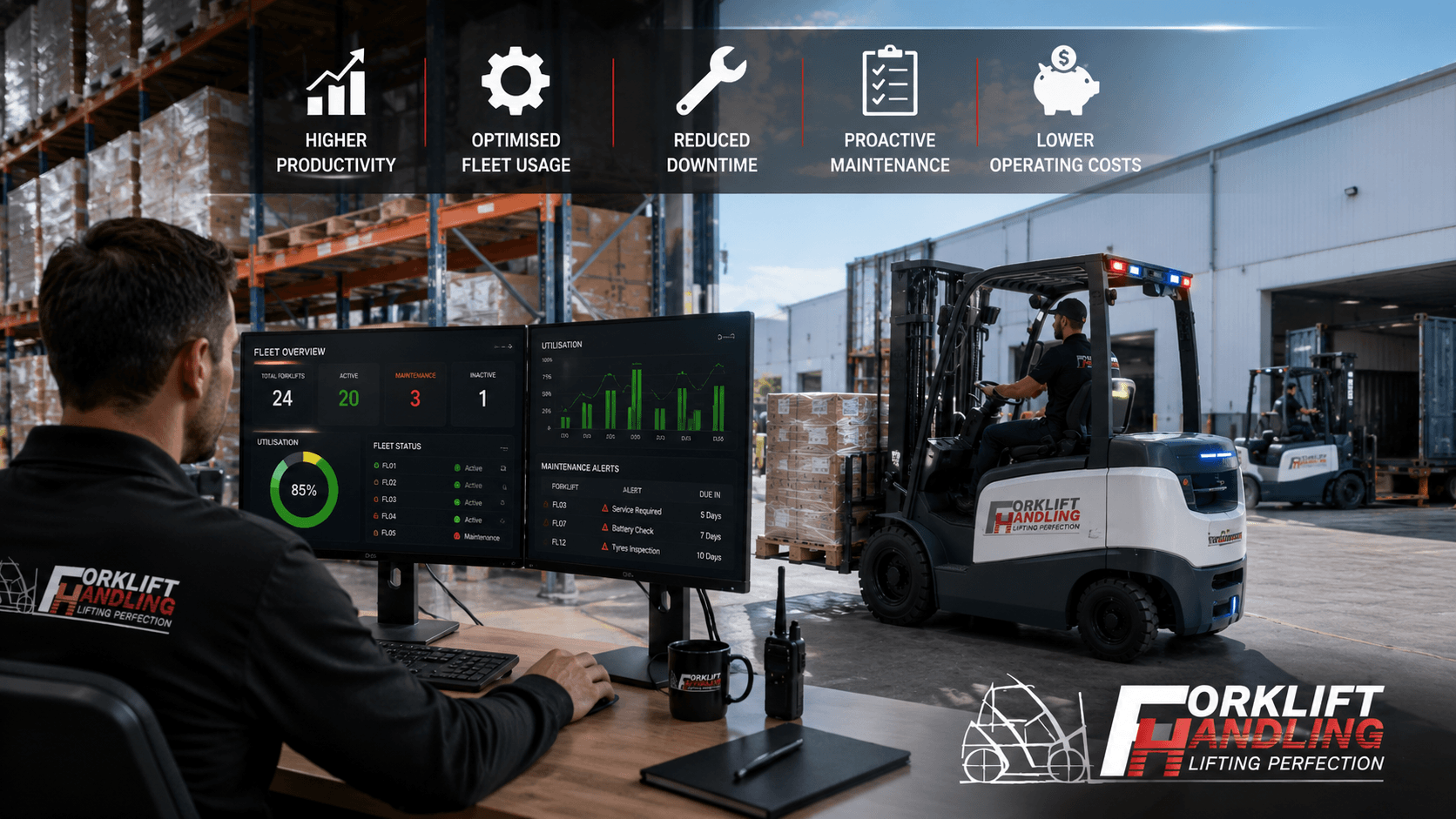
Maximising Efficiency Through Effective Forklift Fleet Management
Forklifts are the backbone of many warehouses, distribution centres, manufacturing facilities, logistics operations, and industrial sites. However, simply owning a fleet of forklifts does not guarantee productivity. Without proper management, businesses can experience unnecessary downtime, increased operating costs, poor equipment utilisation, and safety risks.
This is where forklift fleet management becomes essential.
Effective forklift fleet management helps businesses monitor equipment performance, improve operational efficiency, reduce maintenance costs, and ensure forklifts are being used to their full potential.
In this guide, we’ll explore how forklift fleet management improves productivity and why it has become a critical part of modern material handling operations.
What Is Forklift Fleet Management?
Forklift fleet management refers to the process of monitoring, maintaining, and optimising a company’s forklift fleet to improve performance and reduce costs.
This can include:
- Equipment tracking
- Maintenance scheduling
- Operator management
- Fuel and battery monitoring
- Utilisation reporting
- Safety monitoring
- Performance analysis
By collecting and analysing operational data, businesses can make informed decisions that improve overall productivity.
Why Forklift Fleet Management Matters
Many businesses operate multiple forklifts across various departments, shifts, and facilities.
Without effective management, common issues can include:
- Excessive downtime
- Equipment abuse
- Unplanned breakdowns
- Underutilised forklifts
- Increased maintenance costs
- Reduced productivity
A structured fleet management strategy helps identify and eliminate these inefficiencies.
1. Reduces Equipment Downtime
Downtime is one of the biggest productivity killers in any operation.
When a forklift breaks down unexpectedly, it can:
- Delay shipments
- Interrupt production
- Increase labour costs
- Reduce customer satisfaction
Fleet management systems help reduce downtime through preventative maintenance planning.
- Benefits Include:
- Early fault detection
- Scheduled servicing
- Reduced breakdowns
- Longer equipment lifespan
- Improved reliability
By addressing potential issues before they become major problems, businesses can keep operations running smoothly.
2. Improves Forklift Utilisation
Many businesses are surprised to discover that some forklifts are heavily used while others sit idle for long periods.
Fleet management helps monitor:
- Usage hours
- Equipment availability
- Idle time
- Shift utilisation
This data allows managers to balance workloads more effectively and maximise the use of existing equipment.
Improved Utilisation Can Lead To:
- Increased productivity
- Reduced equipment purchases
- Better resource allocation
- Lower operating costs
Understanding how forklifts are being used can reveal significant opportunities for improvement.
3. Optimises Maintenance Scheduling
Reactive maintenance is expensive.
Waiting for equipment to fail often results in:
- Costly repairs
- Production delays
- Emergency service call-outs
- Increased downtime
Fleet management systems allow businesses to schedule preventative maintenance based on:
- Operating hours
- Manufacturer recommendations
- Equipment condition
- Usage patterns
- Benefits Include:
- Lower repair costs
- Reduced downtime
- Improved reliability
- Extended equipment lifespan
Preventive maintenance is one of the most effective ways to improve forklift productivity.
4. Enhances Operator Accountability
Operator behaviour has a direct impact on equipment performance and workplace safety.
Fleet management systems can track:
- Operator usage
- Access control
- Driving behaviour
- Impact incidents
- Safety compliance
This helps encourage responsible equipment use while reducing unnecessary wear and tear.
Benefits Include:
- Improved safety
- Reduced equipment damage
- Better training opportunities
- Increased accountability
Operators who understand that performance is monitored are often more likely to follow best practices.
5. Improves Warehouse Efficiency
Forklifts play a key role in warehouse productivity.
When fleet managers have visibility into equipment utilisation and movement patterns, they can identify inefficiencies such as:
- Bottlenecks
- Excessive travel distances
- Equipment shortages
- Poor task allocation
Addressing these issues can significantly improve workflow efficiency.
Results May Include:
- Faster order fulfilment
- Reduced travel time
- Improved inventory movement
- Increased throughput
Small improvements across multiple processes can have a substantial impact on overall productivity.
6. Supports Better Decision Making
Data-driven decision making is one of the biggest advantages of forklift fleet management.
Managers gain access to valuable information such as:
- Equipment performance
- Maintenance history
- Utilisation trends
- Cost analysis
- Productivity metrics
This allows businesses to make informed decisions regarding:
- Fleet expansion
- Equipment replacement
- Maintenance planning
- Operator training
Better information leads to better operational outcomes.
7. Reduces Operating Costs
Productivity and cost savings often go hand in hand.
Fleet management can help reduce:
- Maintenance expenses
- Fuel consumption
- Battery replacement costs
- Equipment downtime
- Labour inefficiencies
By improving operational efficiency, businesses can often achieve significant long-term savings.
Technology and Modern Forklift Fleet Management
Many modern forklifts are equipped with telematics systems that provide real-time data and reporting.
Common features include:
- GPS tracking
- Impact monitoring
- Maintenance alerts
- Operator access control
- Battery monitoring
- Usage reporting
These technologies provide greater visibility into fleet performance and help managers identify opportunities for improvement.
Signs Your Business Needs Better Fleet Management
You may benefit from improved fleet management if you experience:
- Frequent forklift breakdowns
- Rising maintenance costs
- Equipment shortages
- Low productivity levels
- Unexplained equipment damage
- Excessive idle time
Addressing these issues can lead to immediate operational improvements.
Frequently Asked Questions
What is forklift fleet management?
Forklift fleet management involves monitoring and optimising forklift usage, maintenance, safety, and performance to improve productivity and reduce costs.
How does fleet management reduce downtime?
By scheduling preventative maintenance and identifying potential issues early, businesses can avoid unexpected breakdowns and costly disruptions.
Can fleet management improve safety?
Yes. Many systems monitor operator behaviour, impact incidents, and safety compliance, helping reduce accidents and equipment damage.
Is forklift fleet management suitable for small businesses?
Absolutely. Even smaller fleets can benefit from improved maintenance planning, utilisation tracking, and operational efficiency.
Conclusion
Forklift fleet management is about more than simply keeping equipment operational. It provides businesses with the tools and insights needed to improve productivity, reduce costs, enhance safety, and maximise the value of their material handling equipment.
By reducing downtime, improving equipment utilisation, optimising maintenance schedules, and leveraging operational data, businesses can create a more efficient and productive workplace.
Whether you operate a small warehouse or a large distribution centre, effective forklift fleet management can play a significant role in improving overall business performance and supporting long-term growth.
Contact us for your Forklift Requirements Today!