
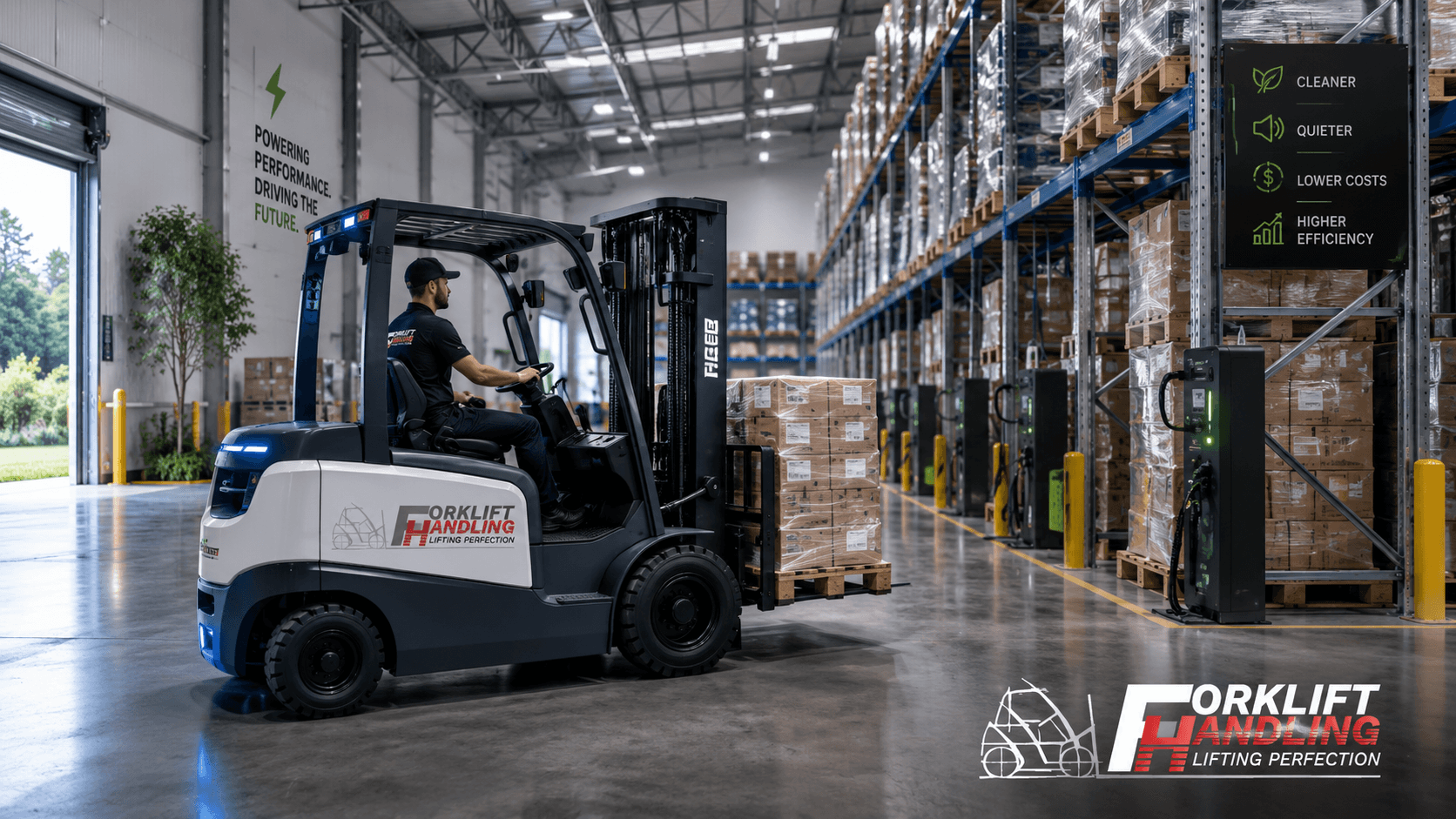
Why More Warehouses Are Choosing Electric Forklifts
The modern warehouse has evolved significantly over the past decade. With increasing pressure to improve efficiency, reduce operating costs, and create safer working environments, businesses are continuously looking for smarter material handling solutions.
One of the biggest shifts in the warehousing industry has been the move towards electric forklifts. Once considered suitable only for light-duty applications, today’s electric forklifts offer impressive performance, lower running costs, and advanced technology that make them an ideal choice for modern warehouse operations.
Whether you operate a small storage facility, a large distribution centre, or an e-commerce fulfilment warehouse, electric forklifts offer a range of benefits that can improve productivity and support long-term business growth.
What Is an Electric Forklift?
An electric forklift is powered by rechargeable batteries rather than diesel, petrol, or LPG fuel. These forklifts use electric motors to perform lifting, lowering, and driving functions.
Modern electric forklifts are available in a variety of sizes and capacities, making them suitable for everything from light warehouse duties to demanding industrial applications.
Common applications include:
- Warehousing
- Distribution centres
- Manufacturing facilities
- Retail logistics
- Cold storage facilities
- E-commerce fulfilment centres
1. Lower Operating Costs
One of the biggest advantages of electric forklifts is their ability to reduce operational expenses.
Unlike diesel or LPG forklifts, electric models do not require fuel purchases. Electricity costs are generally lower and more predictable than fuel costs, helping businesses manage budgets more effectively.
Cost Savings Include:
- Lower energy costs
- Reduced servicing expenses
- Fewer replacement parts
- Less downtime due to maintenance
Over the lifespan of the forklift, these savings can be substantial.
2. Reduced Maintenance Requirements
Electric forklifts have significantly fewer moving parts than internal combustion forklifts.
There are no:
- Engine oil changes
- Fuel filters
- Spark plugs
- Exhaust systems
- Radiators
This results in:
- Less maintenance
- Lower repair costs
- Improved reliability
- Increased uptime
For warehouse managers, reduced maintenance means more productive equipment and fewer operational disruptions.
3. Zero Exhaust Emissions
One of the key reasons electric forklifts are so popular in warehouse environments is their emission-free operation.
Because electric forklifts produce no exhaust fumes, they help create:
- Cleaner indoor air
- Healthier working environments
- Improved employee comfort
- Better environmental compliance
This is especially important in enclosed warehouses where air quality can directly impact worker health and productivity.
4. Quieter Operation
Noise levels can have a significant effect on workplace comfort and efficiency.
Electric forklifts operate much more quietly than diesel or LPG alternatives.
Benefits of Reduced Noise Include:
- Improved communication between employees
- Lower workplace stress levels
- Enhanced operator comfort
- Reduced noise pollution
A quieter warehouse often contributes to a safer and more productive working environment.
5. Improved Energy Efficiency
Electric forklifts convert energy into usable power more efficiently than internal combustion engines.
This results in:
- Better energy utilisation
- Reduced operating costs
- Increased sustainability
- Lower environmental impact
Many businesses are choosing electric forklifts as part of broader sustainability initiatives aimed at reducing carbon emissions and improving environmental performance.
6. Better Manoeuvrability
Warehouse environments often involve:
- Narrow aisles
- Tight corners
- High-density storage systems
- Busy workspaces
Electric forklifts are typically designed with excellent manoeuvrability, making them ideal for operating in confined spaces.
Advantages Include:
- Tighter turning circles
- Precise control
- Smooth operation
- Increased productivity
This can significantly improve efficiency in modern warehouse layouts.
7. Enhanced Operator Comfort
Modern electric forklifts are designed with operator productivity in mind.
Many models feature:
- Ergonomic controls
- Reduced vibration
- Comfortable seating
- Improved visibility
- Smooth acceleration and braking
A comfortable operator is generally a more productive operator, particularly during long shifts.
8. Increased Warehouse Productivity
Electric forklifts can contribute directly to improved warehouse performance.
Benefits include:
- Faster material handling
- Reduced downtime
- Consistent performance
- Improved workflow efficiency
When combined with proper warehouse management systems and efficient storage layouts, electric forklifts can help maximise operational output.
9. Environmentally Friendly Operations
Sustainability has become a major focus for businesses across all industries.
Electric forklifts support environmental goals by:
- Eliminating direct emissions
- Reducing fuel consumption
- Lowering carbon footprints
- Supporting green building initiatives
Many businesses now view electric forklifts as an important part of their environmental responsibility programmes.
10. Ideal for Modern Distribution Centres
Today’s distribution centres require equipment that can operate efficiently while supporting high inventory volumes and fast order fulfilment.
Electric forklifts are perfectly suited to:
- High-volume warehousing
- Distribution operations
- Retail logistics
- E-commerce fulfilment centres
Their combination of efficiency, reliability, and low operating costs makes them a valuable asset in modern supply chains.
Are Electric Forklifts Powerful Enough?
A common misconception is that electric forklifts are less powerful than diesel alternatives.
Modern electric forklifts now offer:
- Competitive lifting capacities
- Excellent acceleration
- Reliable performance
- Advanced battery technology
Many models can comfortably handle the demands of most warehouse and distribution centre operations.
Lithium-Ion vs Lead-Acid Batteries
When choosing an electric forklift, businesses will often encounter two battery options.
Lead-Acid Batteries
Benefits include:
- Lower initial cost
- Proven technology
- Lithium-Ion Batteries
- Faster charging
- Longer lifespan
- Minimal maintenance
- Opportunity charging capabilities
Many modern warehouses are increasingly adopting lithium-ion technology due to its operational advantages.
Frequently Asked Questions
Are electric forklifts cheaper to operate?
Yes. Electric forklifts typically have lower energy, maintenance, and servicing costs compared to diesel or LPG forklifts.
How long do electric forklift batteries last?
Depending on usage and maintenance, batteries can last between 5 and 10 years or longer.
Can electric forklifts be used outdoors?
Yes. Many modern electric forklifts can operate outdoors on suitable surfaces, although they are primarily designed for indoor use.
Are electric forklifts suitable for warehouses?
Absolutely. Electric forklifts are widely regarded as one of the best material handling solutions for warehouse environments.
Conclusion
Electric forklifts have become the preferred choice for many modern warehouses due to their lower operating costs, reduced maintenance requirements, zero emissions, quiet operation, and excellent manoeuvrability.
As warehouse operations continue to evolve, businesses are increasingly investing in electric forklift technology to improve productivity, reduce environmental impact, and create safer working environments.
If you’re considering upgrading your warehouse equipment, an electric forklift could be one of the smartest investments you make. Speak to a forklift handling specialist to determine the ideal electric forklift solution for your specific operational requirements.
Contact us for your Forklift Requirements Today!