
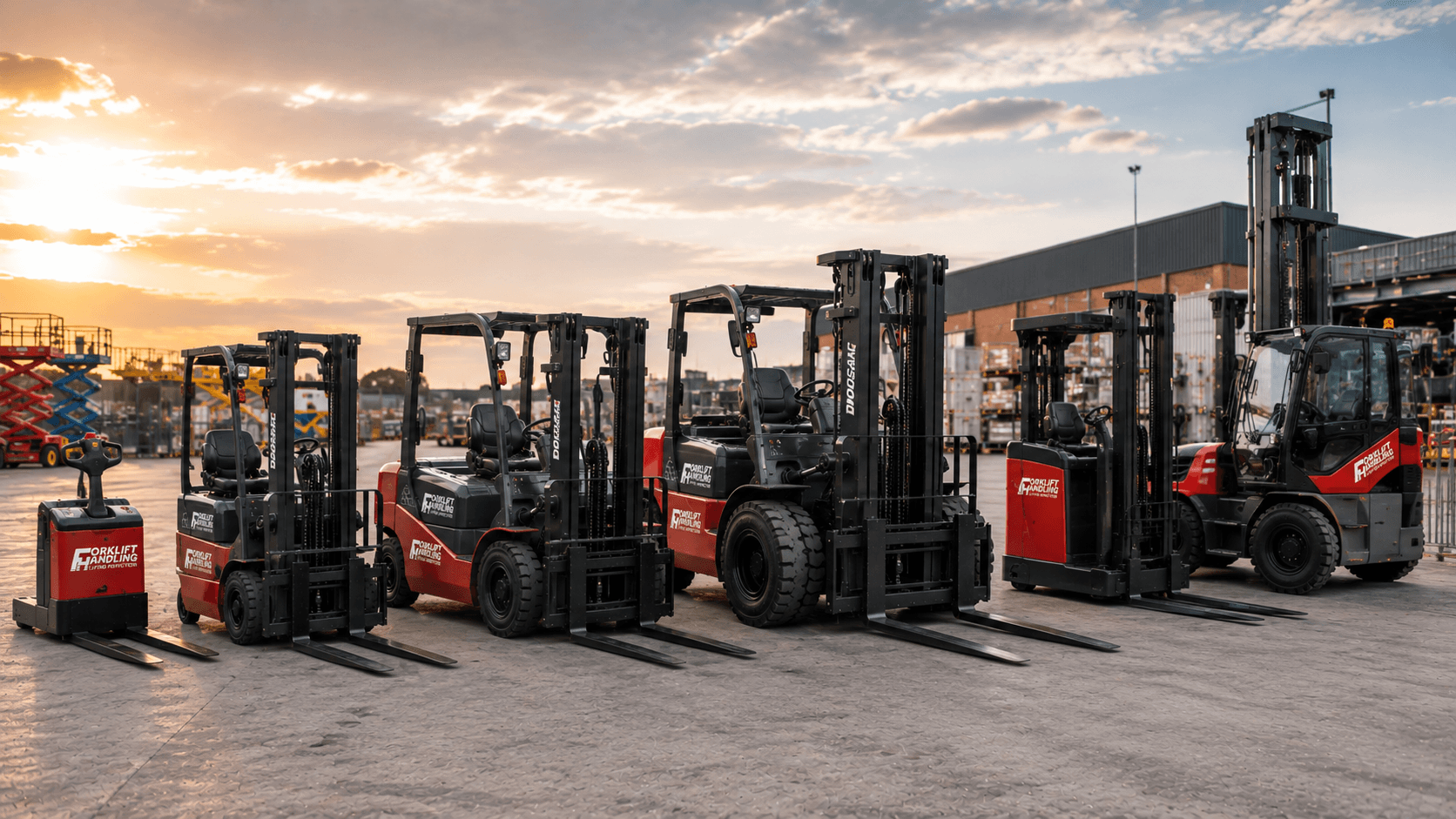
Choosing the Right Forklift for Your Industry
Forklifts play a vital role in material handling operations across a wide range of industries. From warehouses and manufacturing plants to construction sites and logistics hubs, the right forklift can significantly improve productivity, safety, and operational efficiency.
However, not all forklifts are designed for the same applications. Different industries have unique requirements when it comes to lifting capacity, manoeuvrability, fuel type, operating environment, and load handling.
In this guide, we’ll explore the best forklift types for different industries and help you determine which machine is best suited to your business.
Why Choosing the Right Forklift Matters
Selecting the wrong forklift can lead to:
- Reduced productivity
- Increased operating costs
- Higher maintenance expenses
- Safety risks
- Equipment downtime
- Premature wear and tear
By choosing a forklift that matches your operational requirements, you can improve efficiency while maximising your return on investment.
Forklifts for Warehousing and Distribution Centres
Warehouses and distribution facilities require forklifts that can operate efficiently in confined spaces while handling high volumes of palletised goods.
Recommended Forklift Types
Electric Counterbalance Forklifts
Electric counterbalance forklifts are among the most popular choices for warehouse operations.
Benefits include:
- Zero emissions
- Quiet operation
- Low maintenance costs
- Excellent manoeuvrability
- Suitable for indoor environments
Reach Trucks
Reach trucks are specifically designed for high-racking warehouse systems.
Benefits include:
- Exceptional lift heights
- Narrow aisle operation
- Increased storage capacity
- Improved warehouse efficiency
Best For
- Warehouses
- Distribution centres
- Retail logistics facilities
- E-commerce fulfilment centres
Forklifts for Manufacturing Facilities
Manufacturing operations often require forklifts capable of moving raw materials, components, and finished products throughout the production process.
Recommended Forklift Types
Electric Forklifts
Electric forklifts are ideal for indoor manufacturing environments where air quality and noise control are important.
Benefits include:
- Clean operation
- Reduced maintenance
- Lower operating costs
- Excellent indoor performance
LPG Forklifts
LPG forklifts offer flexibility for facilities requiring both indoor and outdoor operation.
Benefits include:
- Fast refuelling
- Lower emissions than diesel
- Versatile performance
- Continuous operation capability
Best For
- Automotive manufacturing
- Food processing facilities
- Packaging plants
- General manufacturing operations
Forklifts for Construction Sites
Construction environments demand powerful and durable equipment capable of operating on uneven terrain and handling heavy loads.
Recommended Forklift Types
Diesel Forklifts
Diesel forklifts provide the strength and reliability required for demanding construction applications.
Benefits include:
- High lifting capacities
- Excellent outdoor performance
- Long operating hours
- Rugged construction
Rough Terrain Forklifts
Designed specifically for challenging job sites, rough terrain forklifts feature larger tyres and enhanced stability.
Benefits include:
- Superior traction
- Operation on uneven surfaces
- Increased ground clearance
- Improved stability on site
Best For
- Building construction
- Civil engineering projects
- Infrastructure development
- Industrial construction sites
Forklifts for Logistics and Transport Companies
Logistics operations require forklifts capable of rapidly loading and unloading goods while maintaining efficiency and reliability.
Recommended Forklift Types
Diesel Forklifts
Ideal for container yards, transport depots, and outdoor loading areas.
Benefits include:
- High productivity
- Fast refuelling
- Continuous operation
- Excellent load handling
Electric Counterbalance Forklifts
Suitable for indoor loading bays and warehouse-based logistics operations.
Benefits include:
- Low operating costs
- Quiet operation
- Efficient pallet handling
Best For
- Freight companies
- Transport depots
- Distribution centres
- Third-party logistics providers
Forklifts for the Mining Industry
Mining operations require heavy-duty equipment capable of performing in harsh environments.
Recommended Forklift Types
Heavy-Duty Diesel Forklifts
These forklifts are built to handle demanding industrial applications and large loads.
Benefits include:
- Exceptional durability
- High lifting capacities
- Reliable outdoor performance
- Robust construction
Telehandlers
Telehandlers combine forklift functionality with extended reach capabilities.
Benefits include:
- Increased versatility
- Long reach capabilities
- Suitable for rugged environments
- Multiple attachment options
Best For
- Mining operations
- Quarry sites
- Heavy industrial facilities
- Resource processing plants
Forklifts for Retail and Wholesale Operations
Retail distribution and wholesale facilities require forklifts that can safely and efficiently move inventory within warehouses and stockrooms.
Recommended Forklift Types
Electric Pallet Stackers
Ideal for smaller warehouses and stockrooms.
Benefits include:
- Compact design
- Easy operation
- Cost-effective material handling
- Minimal maintenance
Electric Counterbalance Forklifts
Suitable for larger inventory movements and pallet handling.
Benefits include:
- Efficient operation
- Reduced operating costs
- Indoor suitability
Best For
- Retail warehouses
- Wholesale suppliers
- Supermarket distribution centres
- Stockholding facilities
Forklifts for Agriculture and Farming
Agricultural operations often involve handling feed, fertiliser, equipment, and harvested products across large outdoor areas.
Recommended Forklift Types
Rough Terrain Forklifts
Benefits include:
- Excellent traction
- Outdoor durability
- Stability on uneven ground
- Versatile operation
Telehandlers
Telehandlers are extremely popular in agricultural environments due to their versatility.
Benefits include:
- Extended reach
- Multiple attachments
- Ability to access elevated areas
- Efficient material movement
Best For
- Farms
- Agricultural processing facilities
- Feed storage operations
- Grain handling facilities
Forklifts for Cold Storage Facilities
Cold storage and refrigerated warehouses require specialised equipment capable of operating in low-temperature environments.
Recommended Forklift Types
Electric Forklifts
Benefits include:
- No emissions
- Reliable indoor operation
- Reduced maintenance requirements
- Suitable for temperature-controlled environments
Many electric forklifts can be fitted with cold-storage packages specifically designed for refrigerated operations.
Best For
- Food storage facilities
- Cold chain logistics
- Pharmaceutical storage
- Frozen goods warehouses
Factors to Consider When Selecting a Forklift
Regardless of your industry, always consider the following:
Load Capacity
Ensure the forklift can safely handle your maximum load requirements.
Lift Height
Consider your storage systems and racking configurations.
Fuel Type
Choose between electric, diesel, or LPG based on your operating environment.
Operating Surface
Indoor floors, outdoor yards, and rough terrain all require different equipment.
Maintenance Requirements
Evaluate long-term servicing and operating costs before making a purchase.
Frequently Asked Questions
Which forklift is best for warehouses?
Electric counterbalance forklifts and reach trucks are generally the best options for warehouse environments.
Are diesel forklifts better than electric forklifts?
It depends on the application. Diesel forklifts excel outdoors and in heavy-duty environments, while electric forklifts are often better suited for indoor operations.
What forklift is used on construction sites?
Diesel forklifts and rough terrain forklifts are commonly used on construction sites due to their durability and outdoor performance.
What is the most versatile forklift?
LPG forklifts and telehandlers are often considered among the most versatile options because they can operate in a variety of environments and applications.
Conclusion
Every industry has unique material handling requirements, which is why selecting the right forklift is critical. Warehouses may benefit from electric forklifts and reach trucks, while construction sites often require diesel or rough terrain models. Logistics operations, manufacturing facilities, agricultural businesses, and mining companies each have their own equipment needs.
By understanding the strengths of different forklift types, businesses can improve productivity, reduce operating costs, and ensure safe, efficient material handling operations.
If you’re unsure which forklift is best for your industry, consult an experienced forklift handling specialist who can assess your operational requirements and recommend the most suitable equipment solution.
Contact us for your Forklift Requirements Today!