by Robin van der Bijl | Feb 8, 2026 | News & Updates
Improving Efficiency with the Right Material Handling Equipment
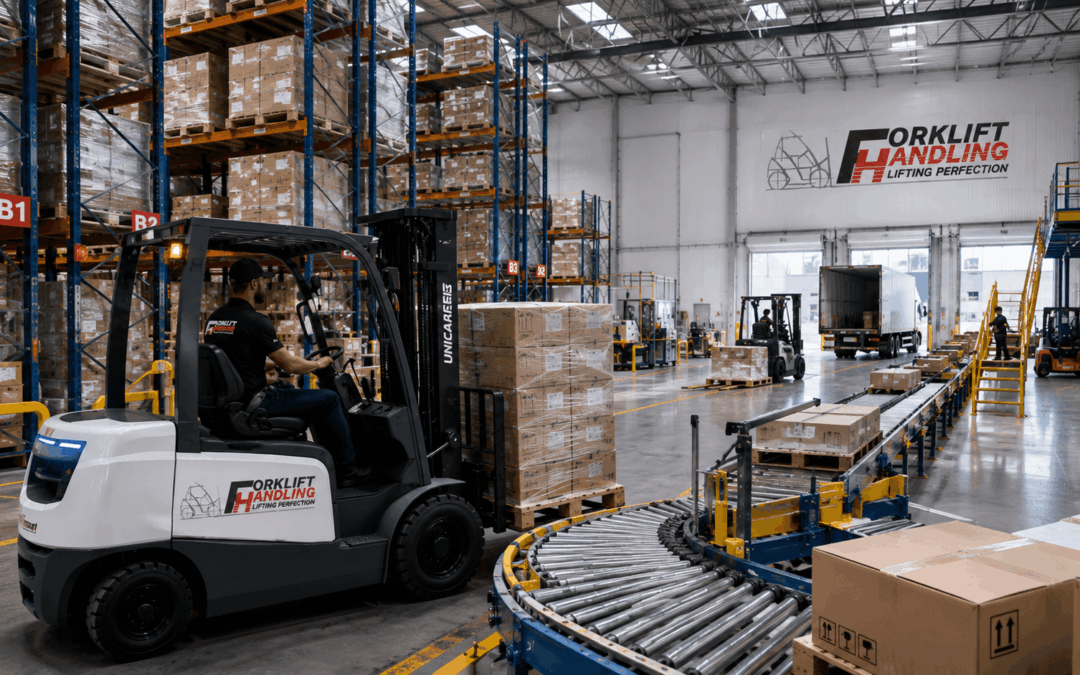
Modern distribution centres are the backbone of today’s supply chain. Whether handling retail products, industrial goods, e-commerce orders, or wholesale inventory, efficient material handling is essential for maintaining productivity, reducing costs, and meeting customer expectations.
As distribution centres continue to grow in size and complexity, businesses require reliable material handling solutions that can optimise workflows, improve safety, and maximise storage capacity.
In this guide, we’ll explore the most effective material handling solutions for distribution centres and how the right equipment can help streamline your operations.
Why Material Handling Is Critical in Distribution Centres
Distribution centres process large volumes of inventory every day. Efficient material handling systems help businesses:
- Increase productivity
- Improve order fulfilment speed
- Reduce labour costs
- Minimise product damage
- Enhance workplace safety
- Maximise warehouse storage capacity
- Reduce operational downtime
The right equipment ensures goods move efficiently from receiving areas to storage locations and ultimately to dispatch bays.
Common Challenges Faced by Distribution Centres
Many distribution facilities face operational challenges such as:
- High inventory volumes
- Limited warehouse space
- Narrow aisles
- Tight delivery schedules
- Labour shortages
- Increasing customer expectations
- Seasonal demand fluctuations
Investing in the right material handling solutions can help overcome these challenges while improving overall efficiency.
Forklifts: The Foundation of Distribution Centre Operations
Forklifts remain one of the most important pieces of equipment in any distribution centre.
Electric Counterbalance Forklifts
Electric forklifts are widely used in distribution centres due to their efficiency and suitability for indoor operations.
Benefits
- Zero emissions
- Quiet operation
- Low maintenance requirements
- Reduced operating costs
- Excellent manoeuvrability
Ideal For
- Warehouse operations
- Loading and unloading trucks
- General pallet movement
- Inventory management
Electric forklifts are often the preferred choice for modern distribution facilities.
Reach Trucks
Reach trucks are designed for warehouses that utilise high-racking storage systems.
Benefits
- Exceptional lift heights
- Narrow aisle operation
- Increased storage density
- Improved inventory accessibility
Ideal For
- High-bay warehouses
- Large distribution centres
- E-commerce fulfilment operations
Reach trucks allow businesses to maximise vertical storage space while maintaining operational efficiency.
Very Narrow Aisle (VNA) Forklifts
For distribution centres looking to maximise storage capacity, VNA forklifts provide an effective solution.
Benefits
- Operate in extremely narrow aisles
- Increase storage density
- Improve warehouse space utilisation
- Enhance inventory accessibility
Ideal For
- High-density warehouses
- Large-scale distribution operations
- Facilities with limited floor space
VNA forklifts can significantly increase storage capacity without requiring facility expansion.
Electric Pallet Trucks
Electric pallet trucks are essential for moving palletised goods quickly and efficiently.
Benefits
- Increased productivity
- Reduced manual handling
- Easy operation
- Lower labour requirements
Ideal For
- Loading bays
- Receiving areas
- Dispatch operations
- Short-distance pallet transport
These machines are often among the most frequently used pieces of equipment within distribution centres.
Pallet Stackers
Pallet stackers provide an affordable solution for lighter-duty material handling tasks.
Benefits
- Compact design
- Cost-effective operation
- Easy manoeuvrability
- Suitable for confined spaces
Ideal For
- Smaller distribution centres
- Secondary storage areas
- Retail stockrooms
For businesses with lower lifting requirements, pallet stackers can provide excellent value.
Warehouse Storage Solutions
Material handling efficiency is closely linked to warehouse storage systems.
Combining the correct storage system with appropriate material handling equipment is essential for operational efficiency.
Loading Bay Equipment
Loading and unloading vehicles efficiently is a critical component of distribution centre operations.
Dock Levellers
Provide safe and efficient access between vehicles and loading bays.
Dock Shelters
Help protect goods from weather conditions during loading and unloading.
Vehicle Restraint Systems
Improve safety by preventing trailer movement during loading operations.
Proper loading bay equipment improves both productivity and workplace safety.
Material Handling Automation
Many modern distribution centres are incorporating automation technologies.
Examples include:
- Automated Guided Vehicles (AGVs)
- Conveyor systems
- Warehouse management systems (WMS)
- Barcode scanning solutions
- Inventory tracking technology
Automation can improve accuracy, increase throughput, and reduce labour dependency.
Choosing the Right Material Handling Solution
When evaluating equipment for a distribution centre, consider:
Warehouse Size
The size and layout of the facility will influence equipment selection.
Storage Configuration
Racking height and aisle width play a major role in determining forklift requirements.
Inventory Volumes
Higher inventory throughput may require larger fleets and specialised equipment.
Growth Plans
Choose solutions that can accommodate future expansion.
Operating Costs
Evaluate total ownership costs rather than focusing solely on purchase price.
Safety Considerations
Material handling equipment should support a safe working environment.
Look for features such as:
- Operator training programmes
- LED warning systems
- Reverse alarms
- Speed control systems
- Fleet management software
- Pedestrian safety solutions
A strong focus on safety can reduce accidents and improve productivity.
Frequently Asked Questions
What is the best forklift for a distribution centre?
Electric counterbalance forklifts and reach trucks are among the most commonly used and effective solutions for distribution centres.
How can a distribution centre improve storage capacity?
Reach trucks, VNA forklifts, and high-density racking systems can significantly increase available storage space.
Are electric forklifts suitable for distribution centres?
Yes. Electric forklifts offer lower operating costs, zero emissions, and excellent performance in indoor environments.
What material handling equipment is essential for a distribution centre?
Most distribution centres rely on forklifts, reach trucks, pallet stackers, pallet trucks, racking systems, and loading bay equipment.
Conclusion
Efficient material handling is essential for the success of any distribution centre. By investing in the right combination of forklifts, reach trucks, pallet handling equipment, storage systems, and loading bay solutions, businesses can improve productivity, maximise storage capacity, and reduce operating costs.
As supply chains continue to evolve, distribution centres that adopt modern material handling solutions will be better positioned to meet growing customer demands while maintaining operational efficiency.
If you’re looking to optimise your distribution centre, consult a material handling specialist who can assess your requirements and recommend the ideal equipment and storage solutions for your operation.
Contact us for your Forklift Requirements Today!
sales@forklifthandling.com
leon@forklifthandling.com
18 Bundo Road, Edenvale, GP, 1609, South Africa
by Robin van der Bijl | Jan 22, 2026 | News & Updates
Choosing the Right Forklift for Mining Operations
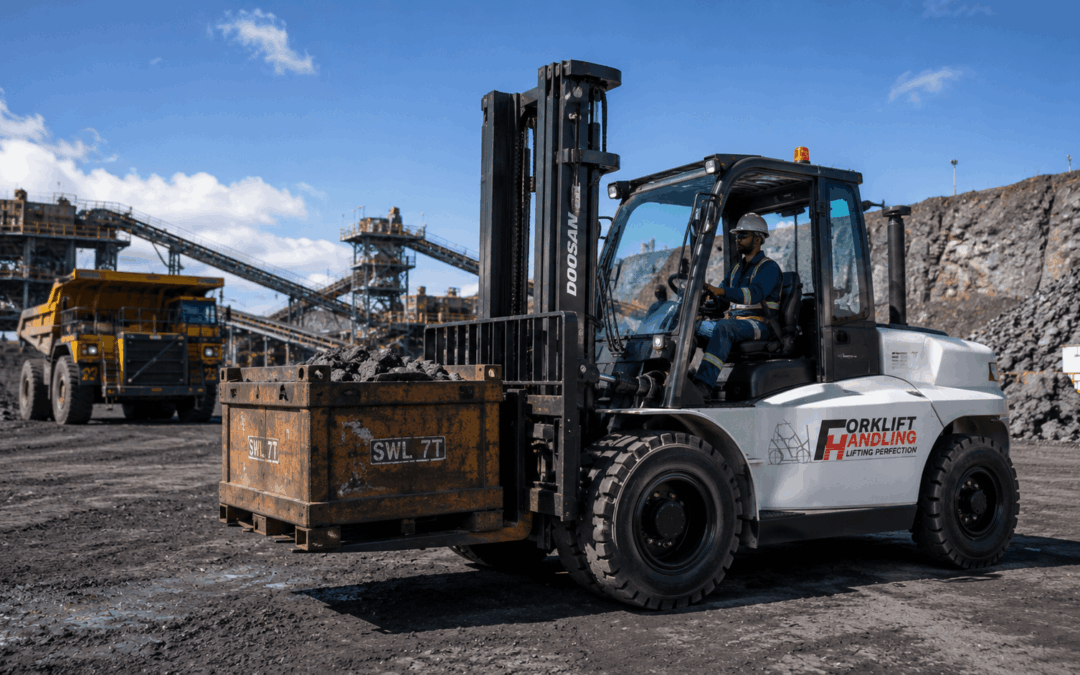
The mining industry operates in some of the most demanding environments in the world. From underground operations and processing plants to open-cast mines and heavy industrial facilities, reliable material handling equipment is essential for maintaining productivity and ensuring safe operations.
Forklifts play a critical role in transporting materials, equipment, spare parts, pallets, and machinery throughout mining sites. However, not all forklifts are suitable for the harsh conditions commonly found in mining environments.
In this guide, we’ll explore the key forklift requirements in the mining industry and help businesses select the right equipment for their operations.
Why Forklifts Are Important in Mining
Mining operations rely on forklifts for a wide variety of tasks, including:
- Moving heavy equipment and components
- Transporting pallets of supplies
- Handling spare parts and maintenance materials
- Loading and unloading delivery vehicles
- Supporting processing plant operations
- Managing warehouse and storage facilities
- Assisting with shutdown and maintenance projects
Because mining sites often operate around the clock, forklifts must be durable, reliable, and capable of performing under challenging conditions.
Unique Challenges of Mining Environments
Mining operations place greater demands on forklifts than most industries.
Common challenges include:
- Dust and debris
- Rough terrain
- Heavy loads
- Long operating hours
- Extreme temperatures
- Remote operating locations
- Continuous production schedules
These conditions require specialised equipment designed for industrial and mining applications.
Key Forklift Requirements for Mining Operations
1. High Lifting Capacity
Mining operations frequently handle heavy loads such as:
- Equipment components
- Steel structures
- Pumps and motors
- Conveyor components
- Industrial parts
- Palletised mining supplies
As a result, forklifts used in mining often require higher lifting capacities than those used in warehouses.
Common mining forklift capacities include:
- 3 Ton Forklifts
- 5 Ton Forklifts
- 7 Ton Forklifts
- 10 Ton Forklifts
- Heavy-Duty Forklifts exceeding 16 Tons
Selecting the correct lifting capacity is essential for both safety and productivity.
2. Durable Construction
Mining forklifts must be built to withstand harsh working conditions.
Important features include:
- Heavy-duty chassis construction
- Reinforced masts
- Industrial-grade hydraulic systems
- Rugged drivetrains
- Protected engine compartments
Durability is a key factor when operating in remote environments where downtime can be extremely costly.
3. Diesel Power for Maximum Performance
While electric forklifts are commonly used in warehouses, diesel forklifts remain the preferred choice for most mining applications.
Benefits of Diesel Forklifts in Mining
- High torque output
- Excellent lifting performance
- Long operating hours
- Fast refuelling
- Reliable outdoor operation
Diesel forklifts are particularly effective in open-cast mines, processing plants, and heavy industrial environments.
4. Rough Terrain Capability
Mining sites often feature uneven ground surfaces.
Forklifts operating in these environments should be equipped with:
- Heavy-duty pneumatic tyres
- Increased ground clearance
- Enhanced suspension systems
- Superior traction capabilities
These features help maintain stability and productivity on challenging terrain.
5. Enhanced Safety Features
Safety is a top priority in mining operations.
Forklifts should be equipped with advanced safety systems such as:
- LED work lights
- Reverse alarms
- Operator presence systems
- Stability control technologies
- High-visibility warning beacons
- Camera systems
- Emergency shutdown systems
Mining companies often have strict safety standards that forklifts must meet before being approved for site use.
Best Forklift Types for Mining Applications
Heavy-Duty Diesel Forklifts
Heavy-duty diesel forklifts are the most common forklifts used in mining operations.
Advantages
- High lifting capacities
- Exceptional durability
- Reliable performance
- Suitable for demanding environments
Best For
- Processing plants
- Maintenance workshops
- Open-cast mining operations
- Equipment yards
These forklifts are designed to handle the heavy loads and harsh conditions commonly encountered in mining.
Rough Terrain Forklifts
Rough terrain forklifts are specifically designed for challenging outdoor environments.
Advantages
- Excellent traction
- Improved stability
- Enhanced ground clearance
- Ability to operate on uneven surfaces
Best For
- Construction areas within mines
- Remote mining locations
- Outdoor maintenance projects
- Infrastructure development
These forklifts perform exceptionally well where traditional warehouse forklifts would struggle.
Telehandlers
Telehandlers combine forklift functionality with extended reach capabilities.
Advantages
- Long reach
- Versatile operation
- Multiple attachment options
- Excellent outdoor performance
Best For
- Equipment maintenance
- Structural projects
- Elevated material handling
- General mining support operations
Telehandlers are increasingly used across mining sites due to their flexibility.
Forklift Applications in Mining
Maintenance Workshops
Forklifts transport components, tools, and replacement parts required for equipment maintenance.
Processing Plants
Material handling equipment supports production operations and movement of processed materials.
Warehouse Facilities
Mining warehouses rely on forklifts to manage inventory and spare parts storage.
Shutdown Projects
Major maintenance shutdowns often require additional forklift capacity to move equipment and materials efficiently.
Construction and Expansion Projects
Forklifts assist with infrastructure development and mine expansion activities.
Common Mistakes When Choosing Mining Forklifts
Avoid these common errors:
- Underestimating lifting requirements
- Selecting warehouse forklifts for outdoor use
- Ignoring terrain conditions
- Choosing equipment without local support
- Focusing solely on purchase price
A forklift that performs well in a warehouse may not survive the harsh demands of a mining operation.
Frequently Asked Questions
What type of forklift is most commonly used in mining?
Heavy-duty diesel forklifts are the most commonly used forklifts in mining due to their power, durability, and ability to operate in demanding outdoor environments.
Are electric forklifts used in mining?
Electric forklifts may be used in specific indoor areas such as warehouses and workshops, but diesel forklifts remain the preferred choice for most mining applications.
What forklift capacity is required for mining?
The required capacity depends on the application. Many mining operations utilise forklifts ranging from 3 tons to over 16 tons.
Why are rough terrain forklifts important in mining?
Mining sites often feature uneven surfaces, loose ground, and challenging terrain. Rough terrain forklifts provide the stability and traction needed to operate safely in these conditions.
Conclusion
Mining operations require forklifts that are powerful, durable, and capable of performing in some of the toughest environments imaginable. High lifting capacities, diesel power, rough terrain capability, advanced safety features, and reliable support are all essential considerations when selecting equipment for a mining site.
Heavy-duty diesel forklifts, rough terrain forklifts, and telehandlers remain among the most effective material handling solutions for mining operations. By choosing equipment specifically designed for mining conditions, businesses can improve productivity, reduce downtime, and maintain safe, efficient operations.
If you’re looking for a forklift solution for your mining operation, consult an experienced forklift handling specialist who can recommend the right equipment based on your site’s specific requirements.
Contact us for your Forklift Requirements Today!
sales@forklifthandling.com
leon@forklifthandling.com
18 Bundo Road, Edenvale, GP, 1609, South Africa

by Robin van der Bijl | Dec 4, 2025 | News & Updates
Choosing the Right Forklift for Logistics and Distribution Operations
In the fast-paced world of logistics, efficiency is everything. From loading and unloading trucks to managing warehouse inventory and moving goods through distribution centres, forklifts are essential for keeping supply chains running smoothly.
For logistics companies, choosing the right forklift is not simply about lifting capacity. The right equipment can improve productivity, reduce operational costs, enhance safety, and minimise downtime. Selecting the wrong forklift, however, can slow operations and negatively impact profitability.
In this guide, we’ll explore the best forklift solutions for logistics companies and help you identify the ideal equipment for your operation.
Why Forklifts Are Critical for Logistics Companies
Logistics businesses handle large volumes of goods every day. Forklifts are used to:
- Load and unload delivery vehicles
- Move pallets within warehouses
- Transport inventory between storage areas
- Organise stock efficiently
- Support cross-docking operations
- Improve turnaround times
Without reliable material handling equipment, logistics operations can quickly become inefficient and costly.
Key Factors to Consider When Choosing a Logistics Forklift
Before investing in forklifts, logistics companies should evaluate several important factors.
1. Warehouse Layout
The design of your warehouse plays a major role in determining which forklift is best suited to your operation.
Consider:
- Aisle widths
- Racking height
- Loading bay access
- Floor conditions
- Storage density
Warehouses with narrow aisles may require specialised forklifts such as reach trucks or VNA forklifts.
2. Load Capacity
Different logistics operations handle different types of products.
Common forklift capacities include:
- 1.5 Ton Forklifts
- 2.5 Ton Forklifts
- 3 Ton Forklifts
- 5 Ton Forklifts
Choosing a forklift with the correct lifting capacity ensures safe and efficient handling of goods.
3. Indoor vs Outdoor Operations
Many logistics companies operate both warehouses and outdoor loading areas.
The operating environment will influence:
- Fuel type
- Tyre selection
- Equipment design
- Maintenance requirements
Understanding where the forklift will be used most often is essential.
Electric Counterbalance Forklifts
Electric forklifts are among the most popular choices for logistics facilities and distribution centres.
Advantages
- Zero emissions
- Lower operating costs
- Quiet operation
- Reduced maintenance requirements
- Excellent manoeuvrability
Best For
- Indoor warehouses
- Distribution centres
- Cross-docking facilities
- Retail logistics operations
Electric forklifts are particularly effective where continuous indoor operation is required.
Reach Trucks
Reach trucks are specifically designed for warehouse environments with high racking systems.
Advantages
- Exceptional lift heights
- Narrow aisle capability
- Increased storage density
- Improved warehouse efficiency
Best For
- High-bay warehouses
- Large distribution centres
- E-commerce fulfilment facilities
- Third-party logistics providers
By maximising vertical storage space, reach trucks can significantly improve warehouse utilisation.
Very Narrow Aisle (VNA) Forklifts
For logistics companies focused on maximising storage capacity, VNA forklifts offer an effective solution.
Advantages
- Operate in extremely narrow aisles
- Increase warehouse storage density
- Improve inventory accessibility
- Maximise available floor space
Best For
- High-density warehouses
- Automated storage facilities
- Large-scale logistics hubs
Although VNA forklifts require specialised warehouse layouts, they can dramatically increase storage efficiency.
Diesel Forklifts
Diesel forklifts remain a popular choice for outdoor logistics applications.
Advantages
- High lifting capacities
- Long operating hours
- Fast refuelling
- Excellent outdoor performance
Best For
- Container yards
- Freight terminals
- Outdoor loading areas
- Heavy-duty logistics operations
Diesel forklifts excel in demanding environments where power and durability are essential.
LPG Forklifts
LPG forklifts provide a versatile solution for logistics companies that require both indoor and outdoor operations.
Advantages
- Fast refuelling
- Lower emissions than diesel
- Flexible operation
- Continuous productivity
Best For
- Mixed-use facilities
- Warehouses with outdoor loading areas
- Multi-shift operations
Many logistics companies use LPG forklifts to bridge the gap between electric and diesel fleets.
Pallet Stackers and Pallet Trucks
Not every logistics task requires a full-sized forklift.
Electric Pallet Stackers
Ideal for:
- Light-duty warehouse work
- Smaller facilities
- Secondary storage areas
Electric Pallet Trucks
Ideal for:
- Moving palletised goods
- Loading vehicles
- Short-distance transport
These solutions can improve efficiency while reducing equipment costs.
Forklift Solutions for Different Logistics Applications
Fleet Management Considerations
As logistics businesses grow, managing multiple forklifts becomes increasingly important.
Consider:
Maintenance Planning
Regular servicing helps reduce downtime and extend equipment life.
Fleet Monitoring
Modern forklifts often include telematics systems that provide:
- Usage tracking
- Maintenance alerts
- Productivity data
- Safety reporting
- Equipment Standardisation
Using similar forklift models across the fleet can simplify training, maintenance, and parts management.
Safety in Logistics Operations
Forklifts operate in busy environments where safety is critical.
Look for features such as:
- LED warning lights
- Reverse alarms
- Stability systems
- Speed limit controls
- Ergonomic operator compartments
- Excellent visibility
A safer forklift fleet can help reduce accidents, damage, and operational disruptions.
Frequently Asked Questions
What is the best forklift for a logistics warehouse?
Electric counterbalance forklifts and reach trucks are often the preferred choices due to their efficiency, manoeuvrability, and suitability for indoor environments.
Are electric forklifts suitable for logistics companies?
Yes. Electric forklifts are ideal for warehouses and distribution centres because they offer lower operating costs and produce no emissions.
What forklift is best for loading trucks?
Counterbalance forklifts are commonly used for loading and unloading trucks due to their versatility and ease of operation.
Should logistics companies buy or rent forklifts?
The decision depends on operational requirements. Businesses with long-term usage often purchase forklifts, while companies with seasonal or fluctuating demand may benefit from forklift rental solutions.
Conclusion
Forklifts are at the heart of efficient logistics operations. Whether you’re managing a distribution centre, freight depot, e-commerce warehouse, or transport facility, selecting the right equipment can improve productivity, reduce costs, and support long-term business growth.
Electric counterbalance forklifts, reach trucks, VNA forklifts, diesel forklifts, LPG forklifts, and pallet handling equipment all play important roles in modern logistics operations. The ideal solution depends on your facility layout, storage systems, operating environment, and daily workload.
By partnering with an experienced forklift handling specialist, logistics companies can build a material handling solution that improves efficiency, enhances safety, and keeps goods moving through the supply chain.
Contact us for your Forklift Requirements Today!
sales@forklifthandling.com
leon@forklifthandling.com
18 Bundo Road, Edenvale, GP, 1609, South Africa
by Robin van der Bijl | Nov 27, 2025 | News & Updates
Why Forklifts Are Essential in Manufacturing Facilities
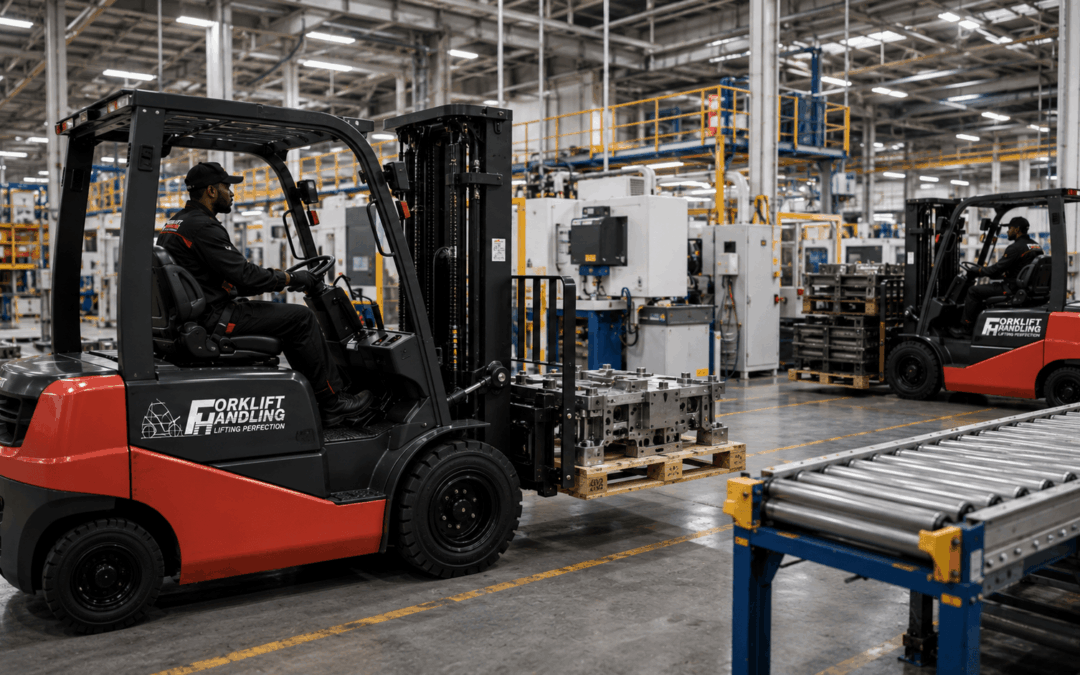
Manufacturing facilities rely on efficient material handling to keep production lines moving, reduce downtime, and maintain productivity. From receiving raw materials to transporting finished products, forklifts play a critical role in almost every stage of the manufacturing process.
However, not all forklifts are suitable for manufacturing environments. Different facilities have varying requirements depending on their products, layout, production volumes, and operating conditions.
Choosing the right forklift can improve workflow efficiency, enhance workplace safety, and reduce operating costs. In this guide, we’ll explore the best forklift types for manufacturing facilities and the key factors businesses should consider when selecting equipment.
Common Material Handling Challenges in Manufacturing
Manufacturing facilities often face unique material handling requirements, including:
- Moving raw materials to production lines
- Transporting finished products to storage areas
- Loading and unloading delivery vehicles
- Handling heavy components and machinery
- Operating in confined indoor spaces
- Supporting continuous production schedules
The right forklift solution can help overcome these challenges while improving overall operational efficiency.
Key Factors to Consider When Choosing a Manufacturing Forklift
1. Indoor or Outdoor Operation
The first consideration is where the forklift will primarily operate.
Indoor Operations
Most manufacturing facilities operate predominantly indoors, making electric forklifts a popular choice due to:
- Zero emissions
- Quiet operation
- Reduced maintenance requirements
- Improved air quality
- Indoor and Outdoor Operations
Facilities that regularly move materials between production areas and external loading zones may benefit from LPG forklifts or a mixed fleet.
Understanding the operating environment will help determine the most suitable forklift type.
2. Load Capacity Requirements
Different manufacturing industries handle different load weights.
Consider:
- Average load weight
- Maximum load weight
- Pallet dimensions
- Machinery and component sizes
Typical manufacturing forklifts range from:
- 1.5 Ton Forklifts
- 2.5 Ton Forklifts
- 3 Ton Forklifts
- 5 Ton Forklifts
Selecting the correct capacity ensures safe and efficient operation.
3. Lift Height Requirements
Many manufacturing facilities utilise storage racking for raw materials and finished goods.
Consider:
- Maximum racking height
- Storage system configuration
- Future expansion requirements
Forklifts should be capable of safely reaching all storage locations without compromising stability.
Best Forklift Types for Manufacturing Facilities
Electric Counterbalance Forklifts
Electric forklifts are among the most common forklifts used in manufacturing environments.
Advantages
- Zero exhaust emissions
- Lower operating costs
- Reduced maintenance
- Quiet operation
- Excellent manoeuvrability
Best For
- Indoor manufacturing plants
- Food production facilities
- Packaging facilities
- Electronics manufacturing
- Pharmaceutical production
Electric forklifts are often the preferred choice where cleanliness and air quality are important.
LPG Forklifts
LPG forklifts offer flexibility for facilities that require both indoor and outdoor operation.
Advantages
- Fast refuelling
- Lower emissions than diesel
- Continuous operation
- Versatile performance
Best For
- Mixed-use facilities
- Manufacturing plants with outdoor yards
- Facilities operating multiple shifts
LPG forklifts provide a practical balance between electric and diesel equipment.
Reach Trucks
Many manufacturing facilities use reach trucks to maximise warehouse storage capacity.
Advantages
- High lift heights
- Narrow aisle capability
- Improved storage density
- Excellent indoor performance
Best For
- Finished goods warehouses
- Raw material storage facilities
- High-racking environments
Reach trucks are ideal where vertical storage is a priority.
Pallet Stackers
For lighter-duty material handling tasks, pallet stackers can be a cost-effective solution.
Advantages
- Compact size
- Easy operation
- Low acquisition costs
- Suitable for smaller facilities
Best For
- Small manufacturing plants
- Production support areas
- Stockrooms and storage zones
Forklift Applications in Manufacturing
Forklifts are used throughout the manufacturing process.
Receiving Raw Materials
Forklifts unload incoming deliveries and transport materials to storage or production areas.
Feeding Production Lines
Materials are delivered directly to assembly lines and manufacturing stations.
Internal Product Movement
Components and work-in-progress inventory are moved between departments and workstations.
Finished Goods Storage
Completed products are transported to warehouse areas for storage and distribution.
Vehicle Loading and Dispatch
Forklifts load finished products onto trucks for delivery to customers and distributors.
For most indoor manufacturing facilities, electric forklifts provide the best long-term value.
Safety Considerations in Manufacturing Facilities
Safety should always be a top priority when selecting forklifts.
Look for features such as:
- Operator presence systems
- LED safety lighting
- Reverse alarms
- Stability control systems
- Ergonomic operator compartments
- Excellent visibility
- Speed control features
A safer forklift contributes to reduced accidents, lower costs, and improved productivity.
Common Mistakes When Choosing Manufacturing Forklifts
Many businesses make costly mistakes when purchasing equipment.
Avoid:
- Selecting insufficient lifting capacity
- Ignoring future growth requirements
- Choosing equipment based solely on price
- Overlooking maintenance costs
- Purchasing forklifts that are too large for facility layouts
Careful planning can help avoid expensive operational issues later.
Frequently Asked Questions
What is the best forklift for a manufacturing facility?
Electric counterbalance forklifts are often the best choice for indoor manufacturing facilities due to their low operating costs and emission-free operation.
Are diesel forklifts suitable for manufacturing plants?
Diesel forklifts are generally better suited to outdoor industrial applications because of exhaust emissions and higher noise levels.
What forklift capacity is most common in manufacturing?
2.5-ton and 3-ton forklifts are among the most commonly used capacities in manufacturing environments.
Should manufacturers choose electric or LPG forklifts?
For predominantly indoor operations, electric forklifts are usually the preferred option. LPG forklifts are ideal for facilities requiring indoor and outdoor flexibility.
Conclusion
Forklifts are a vital part of modern manufacturing operations. From handling raw materials and supporting production lines to managing inventory and dispatching finished products, the right forklift can significantly improve efficiency and productivity.
For most manufacturing facilities, electric counterbalance forklifts offer the ideal combination of performance, reliability, and low operating costs. However, LPG forklifts, reach trucks, and pallet stackers can also play important roles depending on the specific requirements of the facility.
By carefully evaluating your operating environment, load requirements, storage systems, and production demands, you can choose a forklift solution that supports your manufacturing operation for years to come.
If you’re unsure which forklift is best for your facility, consult a forklift handling specialist who can assess your requirements and recommend the most suitable equipment for your business.
Contact us for your Forklift Requirements Today!
sales@forklifthandling.com
leon@forklifthandling.com
18 Bundo Road, Edenvale, GP, 1609, South Africa
by Robin van der Bijl | Oct 9, 2025 | News & Updates
How to Select the Best Forklift for Your Warehouse Operation
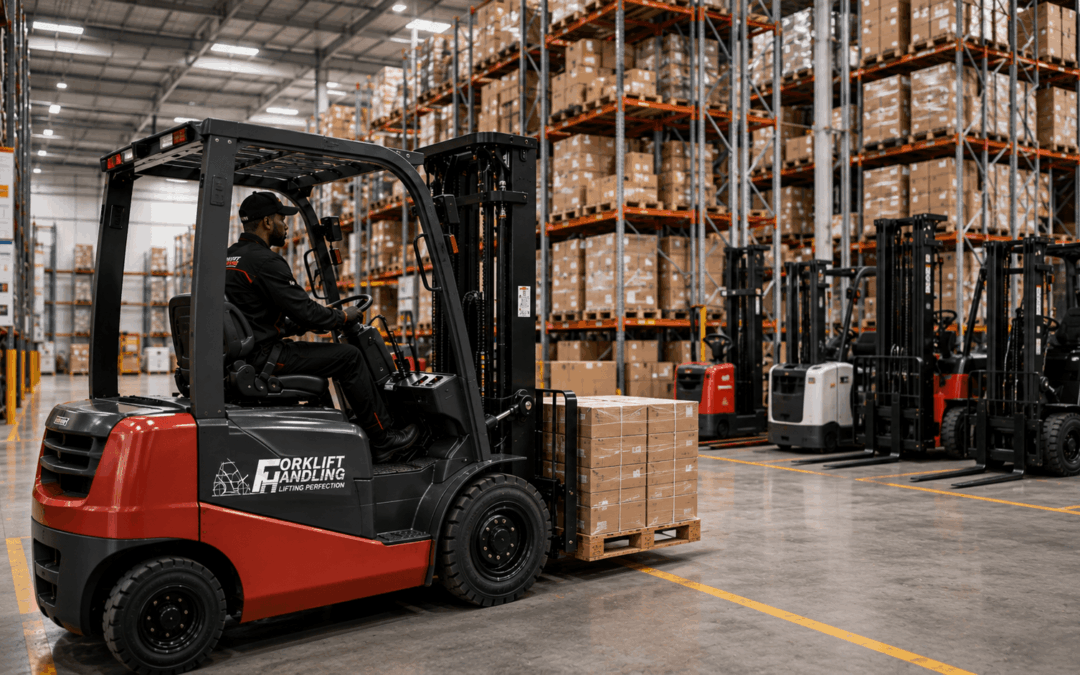
A forklift is one of the most important pieces of equipment in any warehouse. Whether you’re managing a small storage facility, a busy distribution centre, or a large logistics operation, the right forklift can improve productivity, maximise storage space, and enhance workplace safety.
However, not all forklifts are designed for warehouse environments. Choosing the wrong machine can lead to inefficiencies, increased operating costs, and unnecessary downtime.
In this guide, we’ll explore the key factors to consider when selecting a warehouse forklift and discuss the best forklift types for different warehouse applications.
Why Choosing the Right Warehouse Forklift Matters
Warehouses are unique operating environments that often require forklifts to:
- Operate in narrow aisles
- Lift goods to high racking systems
- Move palletised products efficiently
- Work indoors for extended periods
- Handle large volumes of inventory
The right forklift can help businesses:
- Increase productivity
- Improve safety
- Reduce operating costs
- Optimise storage capacity
- Minimise equipment downtime
Choosing a forklift that matches your warehouse requirements is essential for long-term operational success.
Key Factors to Consider When Choosing a Warehouse Forklift
1. Warehouse Layout
Before selecting a forklift, evaluate your warehouse layout.
Consider:
- Aisle widths
- Ceiling height
- Racking configurations
- Floor conditions
- Loading areas
Warehouses with narrow aisles may require specialised forklifts designed for confined spaces, while larger facilities may benefit from traditional counterbalance forklifts.
2. Lift Height Requirements
One of the most important considerations is how high your forklift needs to lift.
Ask yourself:
- What is the height of your highest racking level?
- Will products be stored on multiple levels?
- Do you need access to high-bay storage systems?
Different forklifts offer varying lift heights, making it important to choose equipment that can safely and efficiently reach your storage locations.
3. Load Capacity
Every forklift has a maximum lifting capacity.
When evaluating your requirements, consider:
- Average pallet weight
- Maximum load weight
- Future growth requirements
- Specialised loads or oversized items
Choosing a forklift with insufficient capacity can create safety risks and reduce productivity.
4. Operating Hours
Businesses operating multiple shifts may have different requirements than warehouses operating only during normal business hours.
Consider:
- Daily forklift usage
- Number of shifts
- Charging opportunities
- Refuelling requirements
The amount of daily usage can influence whether an electric or LPG forklift is the most practical option.
Best Forklift Types for Warehouses
Electric Counterbalance Forklifts
Electric counterbalance forklifts are among the most popular warehouse forklifts in South Africa.
Advantages
- Zero emissions
- Quiet operation
- Low maintenance costs
- Excellent manoeuvrability
- Reduced operating costs
Best For
- General warehousing
- Distribution centres
- Retail storage facilities
- Indoor material handling
Electric forklifts are particularly suited to warehouses because they operate cleanly and efficiently in enclosed environments.
Reach Trucks
Reach trucks are designed specifically for high-density warehouse storage.
Unlike standard forklifts, reach trucks extend their forks forward into racking systems, allowing operators to work efficiently in narrow aisles.
Advantages
- Exceptional lift heights
- Narrow aisle capability
- Improved storage utilisation
- Increased warehouse capacity
Best For
- High-bay warehouses
- Distribution centres
- Large logistics operations
- E-commerce fulfilment centres
Many modern warehouses rely heavily on reach trucks to maximise available storage space.
Pallet Stackers
Electric pallet stackers are compact machines designed for lighter warehouse applications.
Advantages
- Cost-effective
- Easy to operate
- Compact design
- Ideal for smaller facilities
Best For
- Small warehouses
- Retail stockrooms
- Light-duty material handling
- Back-of-house operations
For businesses with lower lifting requirements, pallet stackers can provide an affordable alternative to larger forklifts.
Very Narrow Aisle (VNA) Forklifts
VNA forklifts are specifically engineered for warehouses that prioritise maximum storage density.
Advantages
- Operate in extremely narrow aisles
- Increase storage capacity
- Improve warehouse efficiency
- Optimise floor space utilisation
Best For
- High-density warehouses
- Large distribution centres
- Automated storage facilities
Although they require specialised infrastructure, VNA forklifts can dramatically increase warehouse storage capacity.
Electric vs Diesel Forklifts for Warehouses
Electric Forklifts
For most warehouses, electric forklifts are the preferred choice.
Benefits include:
- No emissions
- Lower operating costs
- Quiet operation
- Reduced maintenance
Diesel Forklifts
Diesel forklifts are generally not recommended for indoor warehouse use due to exhaust emissions and noise levels.
However, they may be suitable for:
- Outdoor loading areas
- Yard operations
- Heavy-duty applications
In most warehouse environments, electric forklifts provide the best balance of performance and efficiency.
Common Warehouse Forklift Mistakes
Businesses often make the following mistakes when selecting warehouse forklifts:
Choosing the Cheapest Option
The lowest purchase price does not always result in the lowest operating costs.
Ignoring Future Growth
A forklift that meets today’s requirements may become inadequate as the business expands.
Selecting the Wrong Lift Height
Insufficient lift height can limit warehouse storage capabilities.
Overlooking Aisle Widths
Forklifts that are too large for the warehouse layout can reduce efficiency and increase accident risks.
Underestimating Daily Usage
Equipment should be selected based on actual operational demands rather than assumptions.
Safety Considerations for Warehouse Forklifts
Safety should always be a top priority when selecting warehouse equipment.
Look for features such as:
- Operator presence systems
- LED lighting
- Reverse alarms
- Stability controls
- Ergonomic seating
- Excellent visibility
- Speed management systems
Modern forklifts offer advanced safety technologies that help reduce workplace accidents and improve productivity.
Frequently Asked Questions
What is the best forklift for a warehouse?
Electric counterbalance forklifts and reach trucks are generally considered the best options for most warehouse environments.
Are electric forklifts suitable for warehouses?
Yes. Electric forklifts are ideal for warehouses because they produce no emissions, operate quietly, and offer lower running costs.
What forklift is best for narrow aisles?
Reach trucks and VNA forklifts are specifically designed for narrow aisle operations and high-density storage facilities.
How much forklift capacity do I need?
The required capacity depends on the weight of the loads being handled. Always choose a forklift that safely exceeds your maximum lifting requirements.
Conclusion
Selecting the right forklift for your warehouse is about more than simply choosing a machine that can lift pallets. Factors such as aisle width, lift height, load capacity, operating hours, and warehouse layout all play a critical role in determining the best equipment for your operation.
For most warehouses, electric counterbalance forklifts and reach trucks provide the ideal combination of efficiency, safety, and cost-effectiveness. However, every facility is unique, and the best forklift solution will depend on your specific operational requirements.
By carefully evaluating your warehouse needs and consulting with an experienced forklift specialist, you can invest in equipment that improves productivity, reduces costs, and supports long-term business growth.
Contact us for your Forklift Requirements Today!
sales@forklifthandling.com
leon@forklifthandling.com
18 Bundo Road, Edenvale, GP, 1609, South Africa

Recent Comments