by Robin van der Bijl | Sep 24, 2025 | News & Updates
A Complete Guide to Used Forklift Prices in South Africa
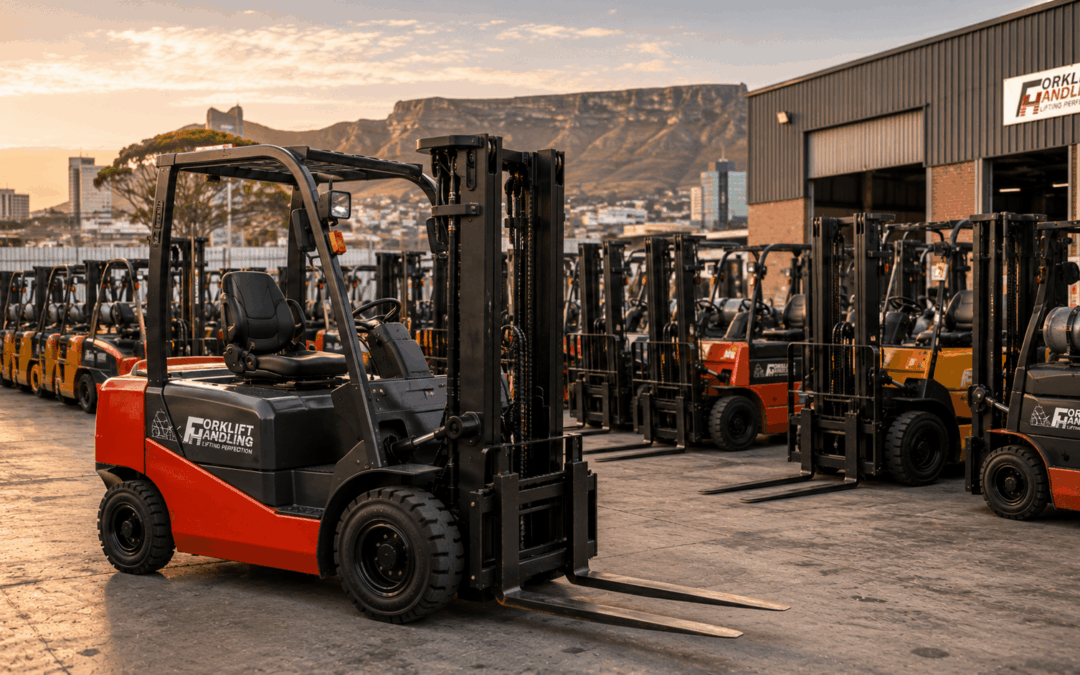
If you’re looking to expand your material handling capabilities without the cost of purchasing new equipment, buying a used forklift can be an excellent investment. Many South African businesses choose used forklifts because they offer significant cost savings while still delivering reliable performance.
However, one of the first questions buyers ask is:
“How much does a used forklift cost in South Africa?”
The answer depends on several factors, including the forklift’s age, brand, lifting capacity, operating hours, fuel type, and overall condition.
In this guide, we’ll break down the typical costs of used forklifts in South Africa and explain the factors that influence pricing.
Average Used Forklift Prices in South Africa
While prices vary depending on the machine and supplier, businesses can generally expect the following price ranges:
Forklift Type Typical Used Price Range
- 1.5 Ton Electric Forklift R80,000 – R180,000
- 2.5 Ton Electric Forklift R120,000 – R250,000
- 2.5 Ton Diesel Forklift R120,000 – R300,000
- 3 Ton Diesel Forklift R150,000 – R350,000
- 5 Ton Diesel Forklift R250,000 – R600,000
- Heavy Duty Forklifts (8 Ton+) R500,000 – R1,500,000+
These prices can vary significantly depending on the condition of the equipment and the reputation of the manufacturer.
What Affects the Price of a Used Forklift?
1. Forklift Capacity
The lifting capacity of the forklift is one of the biggest factors affecting price.
Generally:
- 1.5 to 2.5 ton forklifts are the most affordable
- 3 to 5 ton forklifts attract higher prices
- Heavy-duty forklifts command premium pricing
As lifting capacity increases, so does the overall value of the machine.
2. Forklift Brand
Certain brands hold their value better than others due to their reputation for reliability and parts availability.
Popular forklift brands in South Africa include:
- Toyota
- Hyster
- Yale
- Doosan
- Hyundai
- Mitsubishi
- Nissan
- TCM
- Clark
- Hangcha
Well-known brands typically command higher resale prices because buyers have greater confidence in their long-term reliability.
3. Operating Hours
Just like mileage on a vehicle, forklift operating hours significantly impact value.
As a general guideline:
- Under 5,000 hours = Premium pricing
- 5,000 – 10,000 hours = Average market value
- 10,000 – 15,000 hours = Reduced pricing
- Over 15,000 hours = Budget range
However, maintenance history is often just as important as hours worked.
4. Fuel Type
Different fuel types can influence pricing.
Electric Forklifts
Electric forklifts may cost more if:
- The battery is relatively new
- Battery maintenance records are available
- Charging systems are included
Diesel Forklifts
Diesel forklifts remain popular because of:
- Strong lifting performance
- Outdoor suitability
- Lower initial purchase prices in some categories
LPG Forklifts
LPG forklifts often sit between electric and diesel options in terms of pricing and versatility.
5. Age of the Forklift
Newer forklifts generally sell for more than older models.
However, a well-maintained older forklift from a reputable manufacturer may offer better value than a neglected newer machine.
The condition of the equipment should always be prioritised over age alone.
Should You Buy a Used or New Forklift?
Many businesses compare used forklifts with new machines before making a decision.
Benefits of Buying Used
- Lower upfront investment
- Reduced depreciation
- Faster return on investment
- Immediate availability
- Access to premium brands at lower prices
Benefits of Buying New
- Manufacturer warranty
- Latest technology
- Maximum lifespan
- Lower initial maintenance requirements
For many small and medium-sized businesses, used forklifts provide the best balance between affordability and performance.
Hidden Costs to Consider
When budgeting for a used forklift, don’t focus solely on the purchase price.
Potential additional costs include:
- Transport and delivery
- Forklift inspections
- Servicing and maintenance
- Replacement tyres
- Battery replacement
- Hydraulic repairs
- Licensing and compliance requirements
- Operator training
Understanding these costs can help you avoid unexpected expenses after purchase.
How to Get the Best Value When Buying a Used Forklift
Before purchasing a used forklift, always:
Inspect the Machine
Check:
- Mast condition
- Fork wear
- Hydraulic system
- Tyres
- Engine or battery
- Structural components
- Request Service Records
Maintenance records provide valuable insight into how well the forklift has been cared for.
Buy From a Reputable Supplier
Established forklift suppliers often offer:
- Refurbished equipment
- Warranty options
- Spare parts support
- Maintenance plans
- Technical assistance
This can provide additional peace of mind and reduce ownership risks.
Frequently Asked Questions
What is the cheapest used forklift available?
Smaller electric and diesel forklifts with higher operating hours can often be found from around R80,000 depending on condition and specifications.
Is buying a used forklift worth it?
Yes. Many businesses successfully operate used forklifts for years while saving significantly compared to purchasing new equipment.
How many hours is too many for a used forklift?
Forklifts with more than 15,000 hours should be carefully inspected, but a well-maintained machine can still provide reliable service.
Which used forklift brand is best?
Toyota, Hyster, Yale, Mitsubishi, Nissan, Hyundai, and Doosan are among the most respected forklift brands available in South Africa.
Conclusion
Used forklift prices in South Africa can range from under R100,000 for smaller models to well over R1 million for large-capacity industrial machines. The final price depends on factors such as capacity, brand, fuel type, operating hours, maintenance history, and overall condition.
For businesses looking to maximise value, a quality used forklift can provide excellent performance at a fraction of the cost of buying new. By carefully assessing your operational requirements and purchasing from a trusted supplier, you can secure a reliable forklift that delivers years of productive service.
If you’re considering purchasing a used forklift, speak to a forklift handling specialist who can help you identify the right machine for your budget and operational requirements.
Contact us for your Forklift Requirements Today!
sales@forklifthandling.com
leon@forklifthandling.com
18 Bundo Road, Edenvale, GP, 1609, South Africa
by Robin van der Bijl | Aug 16, 2025 | News & Updates
Choosing the Right Forklift for Your Industry
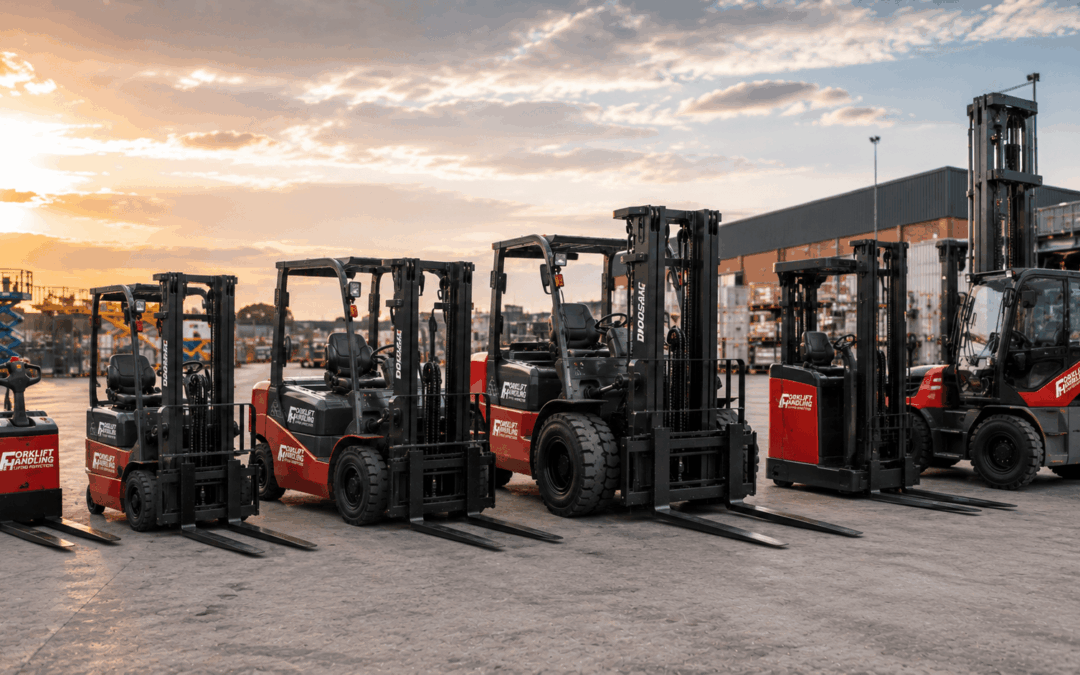
Forklifts play a vital role in material handling operations across a wide range of industries. From warehouses and manufacturing plants to construction sites and logistics hubs, the right forklift can significantly improve productivity, safety, and operational efficiency.
However, not all forklifts are designed for the same applications. Different industries have unique requirements when it comes to lifting capacity, manoeuvrability, fuel type, operating environment, and load handling.
In this guide, we’ll explore the best forklift types for different industries and help you determine which machine is best suited to your business.
Why Choosing the Right Forklift Matters
Selecting the wrong forklift can lead to:
- Reduced productivity
- Increased operating costs
- Higher maintenance expenses
- Safety risks
- Equipment downtime
- Premature wear and tear
By choosing a forklift that matches your operational requirements, you can improve efficiency while maximising your return on investment.
Forklifts for Warehousing and Distribution Centres
Warehouses and distribution facilities require forklifts that can operate efficiently in confined spaces while handling high volumes of palletised goods.
Recommended Forklift Types
Electric Counterbalance Forklifts
Electric counterbalance forklifts are among the most popular choices for warehouse operations.
Benefits include:
- Zero emissions
- Quiet operation
- Low maintenance costs
- Excellent manoeuvrability
- Suitable for indoor environments
Reach Trucks
Reach trucks are specifically designed for high-racking warehouse systems.
Benefits include:
- Exceptional lift heights
- Narrow aisle operation
- Increased storage capacity
- Improved warehouse efficiency
Best For
- Warehouses
- Distribution centres
- Retail logistics facilities
- E-commerce fulfilment centres
Forklifts for Manufacturing Facilities
Manufacturing operations often require forklifts capable of moving raw materials, components, and finished products throughout the production process.
Recommended Forklift Types
Electric Forklifts
Electric forklifts are ideal for indoor manufacturing environments where air quality and noise control are important.
Benefits include:
- Clean operation
- Reduced maintenance
- Lower operating costs
- Excellent indoor performance
LPG Forklifts
LPG forklifts offer flexibility for facilities requiring both indoor and outdoor operation.
Benefits include:
- Fast refuelling
- Lower emissions than diesel
- Versatile performance
- Continuous operation capability
Best For
- Automotive manufacturing
- Food processing facilities
- Packaging plants
- General manufacturing operations
Forklifts for Construction Sites
Construction environments demand powerful and durable equipment capable of operating on uneven terrain and handling heavy loads.
Recommended Forklift Types
Diesel Forklifts
Diesel forklifts provide the strength and reliability required for demanding construction applications.
Benefits include:
- High lifting capacities
- Excellent outdoor performance
- Long operating hours
- Rugged construction
Rough Terrain Forklifts
Designed specifically for challenging job sites, rough terrain forklifts feature larger tyres and enhanced stability.
Benefits include:
- Superior traction
- Operation on uneven surfaces
- Increased ground clearance
- Improved stability on site
Best For
- Building construction
- Civil engineering projects
- Infrastructure development
- Industrial construction sites
Forklifts for Logistics and Transport Companies
Logistics operations require forklifts capable of rapidly loading and unloading goods while maintaining efficiency and reliability.
Recommended Forklift Types
Diesel Forklifts
Ideal for container yards, transport depots, and outdoor loading areas.
Benefits include:
- High productivity
- Fast refuelling
- Continuous operation
- Excellent load handling
Electric Counterbalance Forklifts
Suitable for indoor loading bays and warehouse-based logistics operations.
Benefits include:
- Low operating costs
- Quiet operation
- Efficient pallet handling
Best For
- Freight companies
- Transport depots
- Distribution centres
- Third-party logistics providers
Forklifts for the Mining Industry
Mining operations require heavy-duty equipment capable of performing in harsh environments.
Recommended Forklift Types
Heavy-Duty Diesel Forklifts
These forklifts are built to handle demanding industrial applications and large loads.
Benefits include:
- Exceptional durability
- High lifting capacities
- Reliable outdoor performance
- Robust construction
Telehandlers
Telehandlers combine forklift functionality with extended reach capabilities.
Benefits include:
- Increased versatility
- Long reach capabilities
- Suitable for rugged environments
- Multiple attachment options
Best For
- Mining operations
- Quarry sites
- Heavy industrial facilities
- Resource processing plants
Forklifts for Retail and Wholesale Operations
Retail distribution and wholesale facilities require forklifts that can safely and efficiently move inventory within warehouses and stockrooms.
Recommended Forklift Types
Electric Pallet Stackers
Ideal for smaller warehouses and stockrooms.
Benefits include:
- Compact design
- Easy operation
- Cost-effective material handling
- Minimal maintenance
Electric Counterbalance Forklifts
Suitable for larger inventory movements and pallet handling.
Benefits include:
- Efficient operation
- Reduced operating costs
- Indoor suitability
Best For
- Retail warehouses
- Wholesale suppliers
- Supermarket distribution centres
- Stockholding facilities
Forklifts for Agriculture and Farming
Agricultural operations often involve handling feed, fertiliser, equipment, and harvested products across large outdoor areas.
Recommended Forklift Types
Rough Terrain Forklifts
Benefits include:
- Excellent traction
- Outdoor durability
- Stability on uneven ground
- Versatile operation
Telehandlers
Telehandlers are extremely popular in agricultural environments due to their versatility.
Benefits include:
- Extended reach
- Multiple attachments
- Ability to access elevated areas
- Efficient material movement
Best For
- Farms
- Agricultural processing facilities
- Feed storage operations
- Grain handling facilities
Forklifts for Cold Storage Facilities
Cold storage and refrigerated warehouses require specialised equipment capable of operating in low-temperature environments.
Recommended Forklift Types
Electric Forklifts
Benefits include:
- No emissions
- Reliable indoor operation
- Reduced maintenance requirements
- Suitable for temperature-controlled environments
Many electric forklifts can be fitted with cold-storage packages specifically designed for refrigerated operations.
Best For
- Food storage facilities
- Cold chain logistics
- Pharmaceutical storage
- Frozen goods warehouses
Factors to Consider When Selecting a Forklift
Regardless of your industry, always consider the following:
Load Capacity
Ensure the forklift can safely handle your maximum load requirements.
Lift Height
Consider your storage systems and racking configurations.
Fuel Type
Choose between electric, diesel, or LPG based on your operating environment.
Operating Surface
Indoor floors, outdoor yards, and rough terrain all require different equipment.
Maintenance Requirements
Evaluate long-term servicing and operating costs before making a purchase.
Frequently Asked Questions
Which forklift is best for warehouses?
Electric counterbalance forklifts and reach trucks are generally the best options for warehouse environments.
Are diesel forklifts better than electric forklifts?
It depends on the application. Diesel forklifts excel outdoors and in heavy-duty environments, while electric forklifts are often better suited for indoor operations.
What forklift is used on construction sites?
Diesel forklifts and rough terrain forklifts are commonly used on construction sites due to their durability and outdoor performance.
What is the most versatile forklift?
LPG forklifts and telehandlers are often considered among the most versatile options because they can operate in a variety of environments and applications.
Conclusion
Every industry has unique material handling requirements, which is why selecting the right forklift is critical. Warehouses may benefit from electric forklifts and reach trucks, while construction sites often require diesel or rough terrain models. Logistics operations, manufacturing facilities, agricultural businesses, and mining companies each have their own equipment needs.
By understanding the strengths of different forklift types, businesses can improve productivity, reduce operating costs, and ensure safe, efficient material handling operations.
If you’re unsure which forklift is best for your industry, consult an experienced forklift handling specialist who can assess your operational requirements and recommend the most suitable equipment solution.
Contact us for your Forklift Requirements Today!
083 407 0833
sales@forklifthandling.com
leon@forklifthandling.com
18 Bundo Road, Edenvale, GP, 1609, South Africa
by Robin van der Bijl | Jul 20, 2025 | News & Updates
Which Forklift Is Right for Your Business?
Choosing between an electric and diesel forklift is one of the most important decisions businesses face when investing in material handling equipment. Both options offer unique advantages and are designed for different operating environments.
Whether you manage a warehouse, logistics facility, manufacturing plant, distribution centre, construction site, or industrial operation, selecting the right forklift can improve productivity, reduce operating costs, and enhance workplace safety.
In this guide, we’ll compare electric and diesel forklifts, explore their advantages and disadvantages, and help you determine which option best suits your business needs.
Understanding the Difference Between Electric and Diesel Forklifts
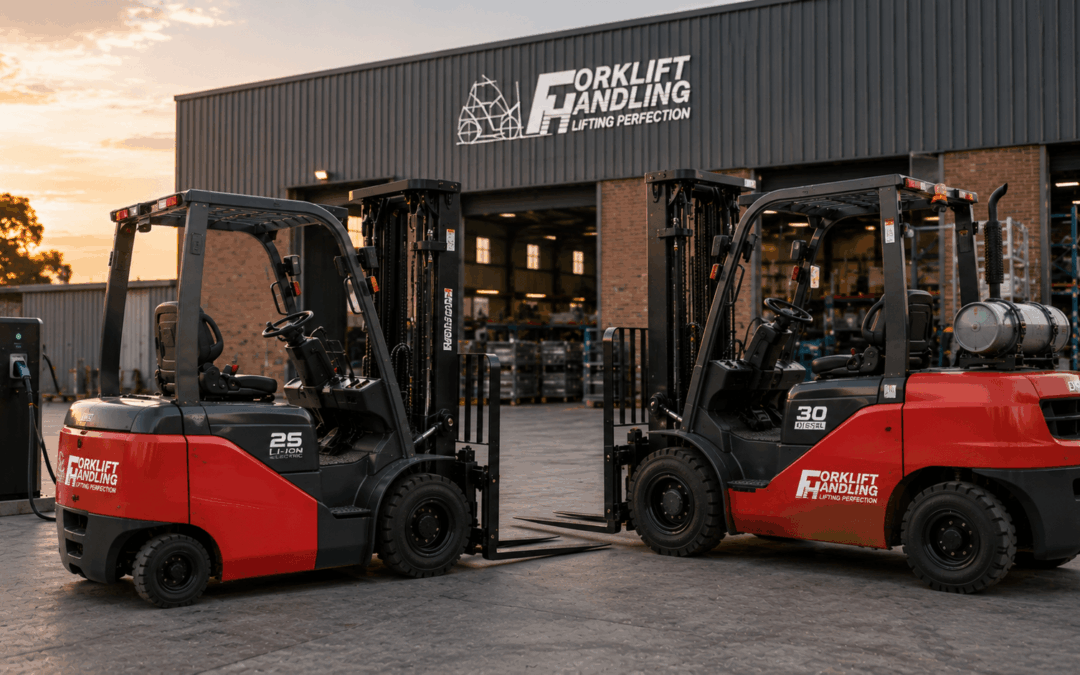
The primary difference between these forklifts is their power source.
Electric Forklifts
Electric forklifts are powered by rechargeable batteries and electric motors. They produce no exhaust emissions and are commonly used indoors.
Diesel Forklifts
Diesel forklifts use internal combustion engines powered by diesel fuel. They are known for their power, durability, and ability to handle demanding outdoor applications.
Electric Forklift Advantages
1. Lower Operating Costs
One of the biggest benefits of electric forklifts is their lower day-to-day running costs.
Businesses can save money through:
- Reduced fuel expenses
- Lower maintenance costs
- Fewer moving engine components
- Less frequent servicing requirements
Over time, these savings can significantly reduce the total cost of ownership.
2. Environmentally Friendly
Electric forklifts produce zero direct emissions, making them an environmentally responsible choice.
Benefits include:
- Reduced carbon footprint
- Improved indoor air quality
- Compliance with environmental regulations
- Cleaner working environments
This makes electric forklifts particularly attractive for businesses focused on sustainability.
3. Ideal for Indoor Operations
Electric forklifts are commonly used in:
- Warehouses
- Distribution centres
- Retail facilities
- Food processing plants
- Pharmaceutical environments
Their emission-free operation makes them safe for enclosed spaces.
4. Quiet Operation
Electric forklifts operate much more quietly than diesel models.
Advantages include:
- Reduced workplace noise
- Improved operator comfort
- Better communication between staff
- Lower noise pollution
This is especially valuable in indoor environments where employees work in close proximity.
5. Smoother Driving Experience
Electric forklifts often provide:
- Smooth acceleration
- Precise control
- Reduced vibration
- Improved manoeuvrability
This can contribute to increased productivity and reduced operator fatigue.
Electric Forklift Disadvantages
1. Battery Charging Time
Unlike diesel forklifts that can be refuelled within minutes, electric forklifts require battery charging.
Charging may take several hours depending on:
- Battery type
- Charger capacity
- Battery condition
Businesses operating multiple shifts may need spare batteries or charging infrastructure.
2. Higher Initial Purchase Cost
Electric forklifts often have a higher upfront purchase price compared to equivalent diesel models.
Although operating costs are lower, the initial investment can be greater.
3. Limited Outdoor Performance
While modern electric forklifts have improved significantly, they may not be ideal for:
- Rough terrain
- Muddy conditions
- Heavy-duty outdoor applications
- Long-distance outdoor travel
Certain outdoor environments remain better suited to diesel equipment.
Diesel Forklift Advantages
1. Exceptional Power and Performance
Diesel forklifts are designed for demanding applications and heavy loads.
Benefits include:
- High lifting capacities
- Strong torque output
- Consistent performance
- Excellent productivity in tough conditions
They are often the preferred choice for industrial operations.
2. Ideal for Outdoor Applications
Diesel forklifts perform exceptionally well in:
- Construction sites
- Shipping yards
- Mining operations
- Manufacturing facilities
- Outdoor storage yards
Their robust design allows them to handle uneven surfaces and harsh environments.
3. Fast Refuelling
Diesel forklifts can be refuelled in minutes, reducing downtime and supporting continuous operations.
This is particularly beneficial for:
- Multi-shift operations
- High-demand environments
- Businesses requiring maximum equipment availability
4. Longer Continuous Operation
Diesel forklifts can often operate for extended periods without interruption.
This makes them well suited to:
- Intensive material handling tasks
- Large industrial facilities
- High-volume operations
- Diesel Forklift Disadvantages
1. Higher Fuel Costs
Fuel expenses can significantly increase operating costs over time.
Businesses must account for:
- Diesel fuel consumption
- Fuel price fluctuations
- Ongoing refuelling requirements
These costs can be substantial for heavily utilised fleets.
2. Increased Maintenance Requirements
Diesel engines contain more moving components than electric systems.
Maintenance may include:
- Oil changes
- Filter replacements
- Engine servicing
- Cooling system maintenance
- Exhaust system repairs
This generally results in higher maintenance costs throughout the forklift’s lifespan.
3. Emissions and Environmental Impact
Diesel forklifts produce exhaust emissions that may not be suitable for indoor environments.
Potential concerns include:
- Air quality issues
- Environmental compliance requirements
- Increased ventilation needs
For this reason, diesel forklifts are typically used outdoors.
4. Higher Noise Levels
Diesel engines generate more noise than electric models.
This can affect:
- Operator comfort
- Workplace communication
- Noise-sensitive environments
Are electric forklifts cheaper to run?
Yes. Although they often cost more upfront, electric forklifts generally have lower fuel and maintenance expenses.
How long do electric forklift batteries last?
Most forklift batteries can last between 5 and 10 years when properly maintained, depending on usage and charging practices.
Can electric forklifts be used outdoors?
Yes. Many modern electric forklifts can operate outdoors on suitable surfaces, although diesel forklifts are often better suited for rough terrain and heavy-duty outdoor work.
Which forklift has a longer lifespan?
Both electric and diesel forklifts can provide many years of service when properly maintained. The overall lifespan depends on operating conditions, maintenance practices, and utilisation levels.
Conclusion
Both electric and diesel forklifts offer significant advantages depending on your operational requirements. Electric forklifts excel in indoor environments where efficiency, low operating costs, and environmental considerations are priorities. Diesel forklifts remain the preferred choice for heavy-duty outdoor applications where power, durability, and extended runtime are essential.
Before making a decision, carefully evaluate your workload, operating environment, budget, and long-term business goals. Choosing the right forklift can improve productivity, reduce costs, and deliver long-term value for your operation.
For expert advice on selecting the best forklift for your business, consult a trusted forklift handling specialist who can recommend the ideal solution for your specific requirements.
Contact us for your Forklift Requirements Today!
sales@forklifthandling.com
leon@forklifthandling.com
18 Bundo Road, Edenvale, GP, 1609, South Africa
by Robin van der Bijl | Jun 11, 2025 | News & Updates
A Complete Guide to Purchasing a Reliable Used Forklift
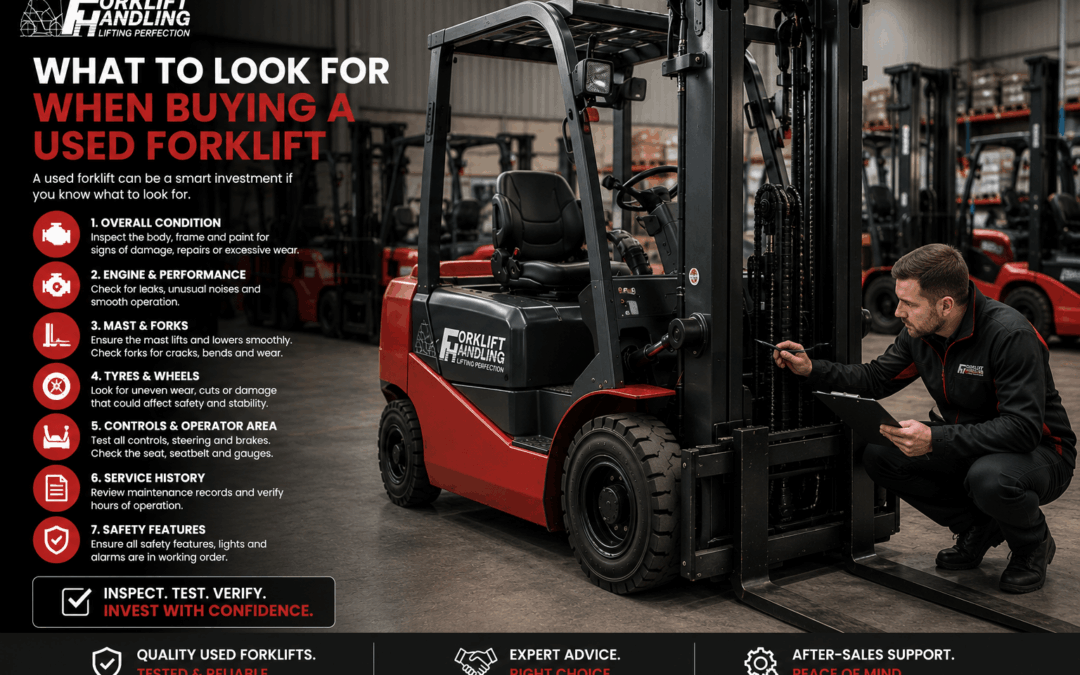
Buying a used forklift can be a cost-effective way to expand your material handling capabilities without the significant investment required for a new machine. For warehouses, logistics companies, manufacturers, construction firms, and distribution centres, a quality used forklift can provide years of reliable service at a fraction of the cost of a new unit.
However, not all used forklifts are created equal. Purchasing the wrong machine can lead to costly repairs, downtime, and safety concerns. Knowing what to inspect before making a purchase can help you avoid expensive mistakes and ensure you get the best value for your investment.
In this guide, we’ll cover the most important factors to consider when buying a used forklift.
Why Buy a Used Forklift?
Many businesses choose used forklifts because they offer several advantages:
- Lower purchase price
- Faster return on investment
- Reduced depreciation
- Immediate availability
- Access to premium brands at lower costs
While the savings can be substantial, proper inspection is essential to ensure you’re purchasing a reliable machine.
1. Check the Forklift’s Operating Hours
Just as mileage is important when buying a vehicle, operating hours are one of the most important indicators of a forklift’s condition.
Most forklifts are equipped with an hour meter that records usage.
As a general guideline:
- Under 5,000 hours: Low usage
- 5,000 – 10,000 hours: Moderate usage
- 10,000 – 15,000 hours: High usage
- Over 15,000 hours: Requires careful inspection
A forklift with high operating hours isn’t necessarily a bad purchase if it has been properly maintained, but it may require more frequent repairs and servicing.
2. Review Service and Maintenance Records
A well-maintained forklift can often outperform a neglected machine with fewer hours.
Request maintenance records and look for evidence of:
- Scheduled servicing
- Oil changes
- Hydraulic maintenance
- Brake servicing
- Tyre replacements
- Battery maintenance
- Major repairs
Comprehensive service records demonstrate that the equipment has been properly cared for and can provide insight into future maintenance requirements.
3. Inspect the Mast and Forks
The mast and forks are among the most heavily used components of any forklift.
Check for:
- Mast Wear
- Excessive side-to-side movement
- Cracked welds
- Bent components
- Unusual noises during lifting
- Fork Wear
- Bent forks
- Uneven fork height
- Cracks or repairs
- Excessive thinning at the heel of the fork
Damaged lifting components can compromise safety and may be expensive to replace.
4. Examine the Hydraulic System
The hydraulic system powers lifting, tilting, and other critical forklift functions.
Inspect for:
- Hydraulic fluid leaks
- Damaged hoses
- Slow lifting performance
- Jerky movements
- Unusual sounds during operation
Hydraulic repairs can be costly, making this one of the most important areas to evaluate.
5. Assess the Condition of the Tyres
Forklift tyres significantly affect safety, stability, and operating efficiency.
Check for:
- Uneven wear
- Chunking or cracking
- Flat spots
- Low tread depth
- Signs of impact damage
Replacing forklift tyres can represent a significant expense, so their condition should be factored into your purchasing decision.
6. Evaluate the Engine or Battery
Diesel and LPG Forklifts
Inspect:
- Engine startup performance
- Smoke emissions
- Oil leaks
- Cooling system condition
- Engine noise
Excessive smoke, hard starting, or unusual noises may indicate costly engine problems.
Electric Forklifts
Battery replacement is one of the largest expenses associated with electric forklifts.
Check:
- Battery age
- Charging performance
- Corrosion on terminals
- Battery maintenance history
- Overall runtime between charges
A battery nearing the end of its life can significantly increase the total cost of ownership.
7. Test All Safety Features
Safety should never be overlooked when purchasing used equipment.
Ensure the forklift’s safety systems are functioning correctly, including:
- Brakes
- Seat belts
- Warning lights
- Reverse alarm
- Horn
- Lights
- Overhead guard
- Parking brake
Faulty safety systems can create compliance issues and increase the risk of workplace accidents.
8. Look for Signs of Structural Damage
Carefully inspect the forklift frame for:
- Cracks
- Rust
- Poor-quality repairs
- Bent chassis components
- Weld repairs
Structural damage may indicate previous accidents or overloading and could affect the forklift’s long-term reliability.
9. Verify the Load Capacity Plate
Every forklift should have a clearly visible data plate showing:
- Load capacity
- Lift height
- Serial number
- Model information
Never purchase a forklift without verifying that the capacity plate matches the machine and remains legible.
This information is critical for safe operation and regulatory compliance.
10. Buy From a Reputable Supplier
One of the best ways to reduce risk is to purchase from a trusted forklift supplier rather than an unknown private seller.
A reputable supplier can often provide:
- Equipment inspections
- Service history
- Warranty options
- Spare parts support
- Maintenance packages
- Technical advice
Choosing an established supplier provides peace of mind and ongoing support after the sale.
Common Mistakes to Avoid
Businesses purchasing used forklifts often make the following mistakes:
- Focusing only on price
- Ignoring maintenance history
- Failing to inspect the battery or engine
- Overlooking tyre condition
- Buying a forklift with insufficient capacity
- Skipping a professional inspection
A low purchase price can quickly become expensive if significant repairs are required shortly after purchase.
Frequently Asked Questions
How many hours is too many for a used forklift?
There is no fixed limit, but forklifts with more than 15,000 hours should be carefully inspected and supported by strong maintenance records.
Is buying a used forklift worth it?
Yes. A well-maintained used forklift can offer excellent value and years of reliable service while significantly reducing upfront costs.
Should I get a professional inspection?
Absolutely. A professional forklift inspection can identify issues that may not be obvious during a visual assessment and could save you thousands in repair costs.
What is the most important thing to check?
Maintenance history, operating hours, hydraulic condition, mast wear, and the engine or battery condition are among the most critical factors to evaluate.
Conclusion
Buying a used forklift can be a smart investment when approached correctly. By carefully inspecting the machine, reviewing maintenance records, and purchasing from a reputable supplier, businesses can secure reliable equipment while keeping costs under control.
Before making your final decision, take the time to thoroughly evaluate the forklift’s condition, performance, and service history. A little extra due diligence today can prevent costly repairs and downtime tomorrow.
If you’re looking for a quality used forklift, consult a trusted forklift handling specialist who can help you find the right machine for your operational requirements and budget.
Contact us for your Forklift Requirements Today!
sales@forklifthandling.com
leon@forklifthandling.com
18 Bundo Road, Edenvale, GP, 1609, South Africa
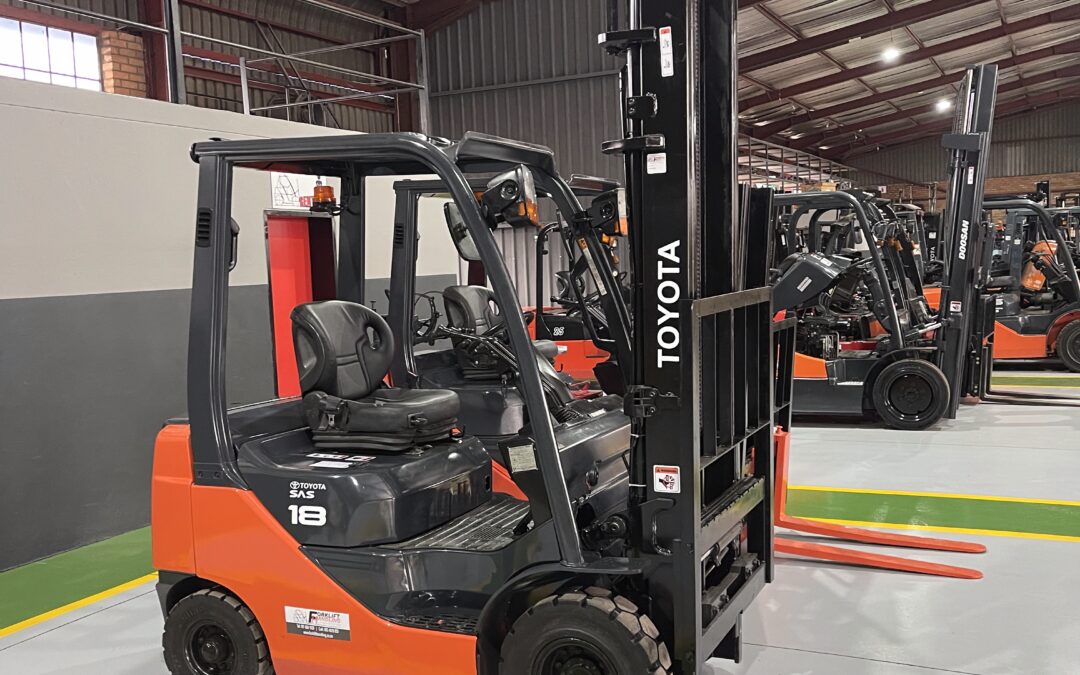
by Robin van der Bijl | May 26, 2025 | 1.8 Ton Diesel Forklifts, Toyota
Toyota 1.8 Ton Diesel Forklift – Precision Power with Proven Reliability
The Toyota 1.8 Ton Diesel Forklift combines dependable performance, fuel efficiency, and compact design to meet the demands of busy material handling environments. Engineered for tight operating spaces, this diesel-powered forklift is a smart solution for light-to-medium-duty operations such as warehouses, distribution hubs, and manufacturing facilities.
Key Features:
-
Lifting Capacity: 1,800 kg (1.8 tons)
-
Engine: Powerful, fuel-efficient Toyota diesel engine for long-lasting performance
-
Compact Frame: Easy to maneuver in tight spaces and narrow aisles
-
Operator Comfort: Ergonomic seating, low noise, and intuitive controls reduce fatigue
-
Built to Last: Toyota’s renowned durability and engineering excellence
-
Precision Control: Responsive hydraulics and excellent turning radius for smooth handling
Why Choose the Toyota 1.8 Ton Diesel Forklift?
-
Proven Efficiency: Excellent fuel economy without compromising on lifting strength
-
Adaptable Functionality: Ideal for logistics centers, retail warehouses, and small industrial sites
-
Low Cost of Ownership: Minimal maintenance and robust components ensure long-term value
-
Globally Respected Brand: Toyota forklifts are trusted worldwide for innovation and reliability
When your operation demands compact strength, precision movement, and consistent power, the Toyota 1.8 Ton Diesel Forklift delivers the trusted performance your team can rely on.

Recent Comments